

The Need for Term Limits in India's Political Landscape
The executive office without a limit
 The Hindu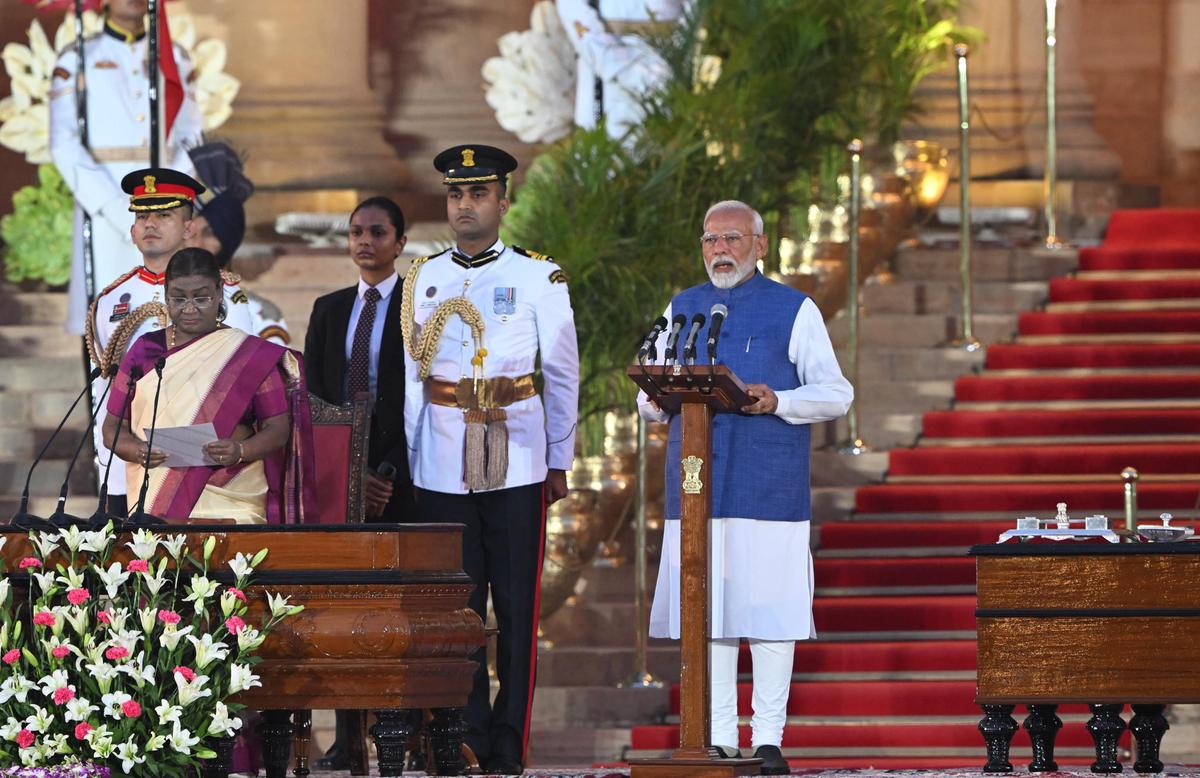
Image: The Hindu
On March 22, 2026, Prime Minister Narendra Modi surpassed 8,931 days in office, raising constitutional questions about the absence of term limits in India. Unlike many democracies, India allows indefinite tenure for its leaders, which may undermine accountability and democratic integrity, necessitating a reevaluation of existing political structures.
- 01Narendra Modi has served over 8,931 days in office, surpassing previous records.
- 02India lacks constitutional term limits for its executive leaders, unlike many democracies.
- 03The absence of term limits raises concerns about accountability and prolonged incumbency.
- 04Reforms could include exempting confidence votes from disqualification laws or instituting term limits.
- 05Current political structures may not effectively check executive power as intended by the framers of the Constitution.
Advertisement
In-Article Ad
As of March 22, 2026, Prime Minister Narendra Modi has served 8,931 days in office, surpassing the previous record held by Pawan Kumar Chamling of Sikkim. This milestone highlights a significant constitutional issue in India: the absence of term limits for executive positions. Unlike other democracies, such as the United States and South Korea, which have imposed term limits to prevent the concentration of power, India allows indefinite tenure for its leaders. This situation raises concerns about the effectiveness of parliamentary accountability, particularly following the introduction of the Tenth Schedule in 1985, which has weakened the power of no-confidence motions. Critics argue that while voters have repeatedly endorsed Modi's leadership, the lack of term limits may lead to diminishing democratic integrity. To address this, potential reforms could involve exempting confidence votes from disqualification laws or establishing constitutional amendments to limit consecutive terms for Prime Ministers and Chief Ministers. The current political framework may not possess the self-correcting mechanisms envisioned by the Constitution's framers, necessitating urgent scrutiny.
Advertisement
In-Article Ad
The absence of term limits may lead to a concentration of power, affecting governance and accountability in India.
Advertisement
In-Article Ad
Reader Poll
Should India implement term limits for its Prime Ministers?
Connecting to poll...
Read the original article
Visit the source for the complete story.