




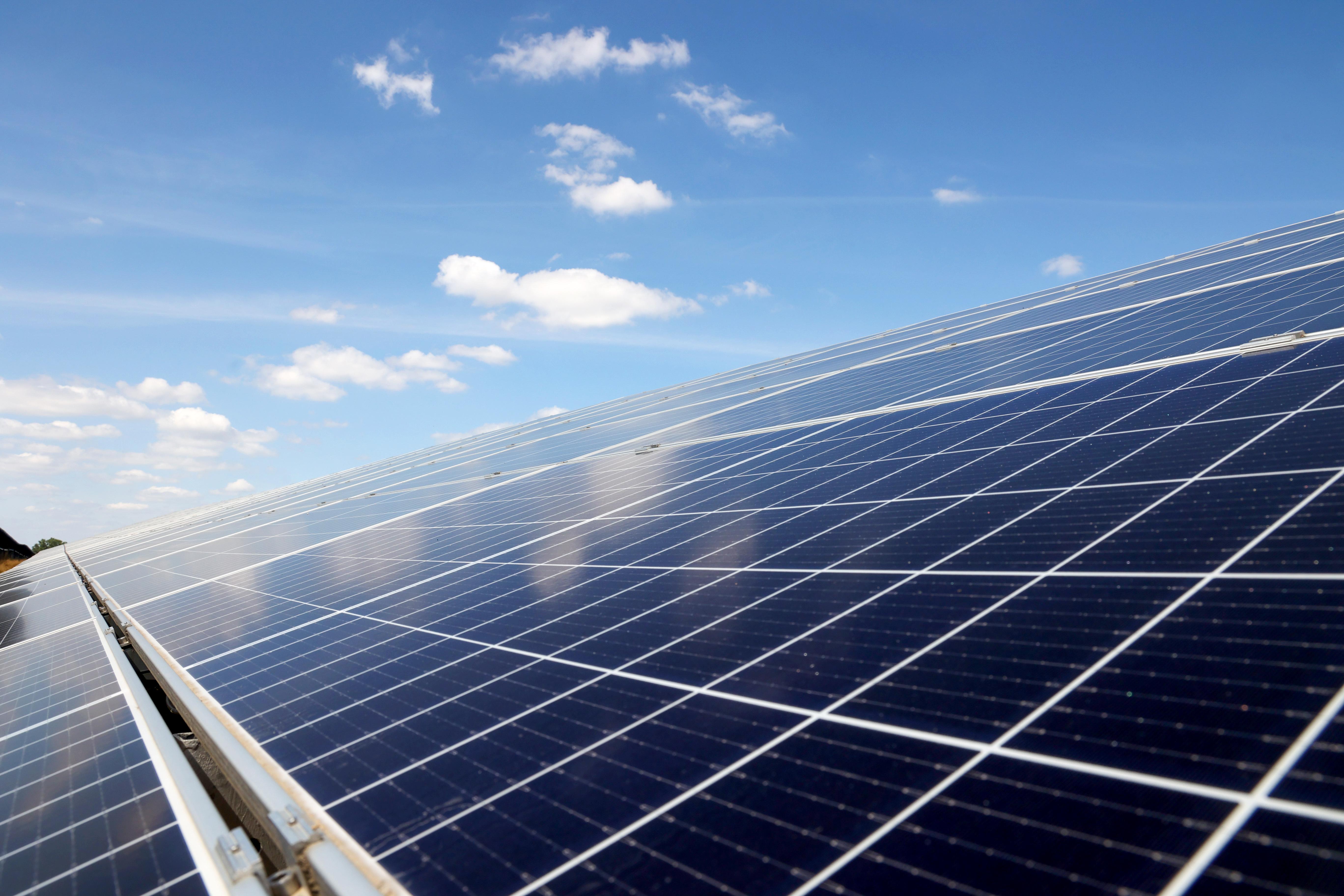

India's DRE Initiatives to Slash ₹2.4 Trillion Subsidy Burden
DRE schemes to cut states' ₹2.4 trillion subsidy burden, says MNRE
 Business Standard
Image: Business Standard
India's distributed renewable energy (DRE) initiatives under the PM Kusum and PM Surya Ghar Yojana are set to significantly reduce the ₹2.4 trillion ($29 billion USD) electricity subsidy burden for states. The Ministry of New and Renewable Energy (MNRE) reported substantial growth in solar capacity, with 16.3 gigawatts added in 2025-26, contributing to a shift towards non-fossil energy sources.
- 01DRE initiatives aim to cut states' ₹2.4 trillion subsidy burden over time.
- 02India added 16.3 GW of DRE capacity in 2025-26, accounting for 36% of annual solar capacity growth.
- 03The PM Surya Ghar Yojana saw over 18.7 lakh rooftop solar installations in FY26.
- 04Non-fossil energy sources now make up 29% of India's total generation.
- 05Solar module imports decreased significantly from $2.15 billion to $758 million.
Advertisement
In-Article Ad
India's distributed renewable energy (DRE) initiatives, part of the PM Kusum scheme and PM Surya Ghar Yojana, are expected to alleviate the states' ₹2.4 trillion ($29 billion USD) electricity subsidy burden. According to Santosh Sarangi, secretary of the Ministry of New and Renewable Energy (MNRE), these programs are accelerating the solarisation of agriculture and households. In 2025-26, India added 16.3 gigawatts of DRE capacity, which contributed to 36% of the annual solar capacity addition. The PM Surya Ghar Yojana alone resulted in over 18.7 lakh rooftop solar installations, a significant increase from 8.51 lakh in FY25. The daily installation rate currently stands at 11,000 rooftops. The total solar capacity reached 150 GW by March 2026, with non-fossil sources now contributing 29% to total energy generation, up from 25% the previous year. Additionally, solar module imports fell dramatically from $2.15 billion in FY25 to $758 million in FY26, reflecting India's growing self-sufficiency in renewable energy manufacturing. The government also allocated around ₹787 crore for developing transmission infrastructure under the Green Energy Corridor program.
Advertisement
In-Article Ad
The reduction in electricity subsidies will likely lead to lower tariffs for consumers, benefiting both households and industries in states across India.
Advertisement
In-Article Ad
Reader Poll
Do you support government initiatives for renewable energy expansion?
Connecting to poll...
More about Ministry of New and Renewable Energy
Read the original article
Visit the source for the complete story.