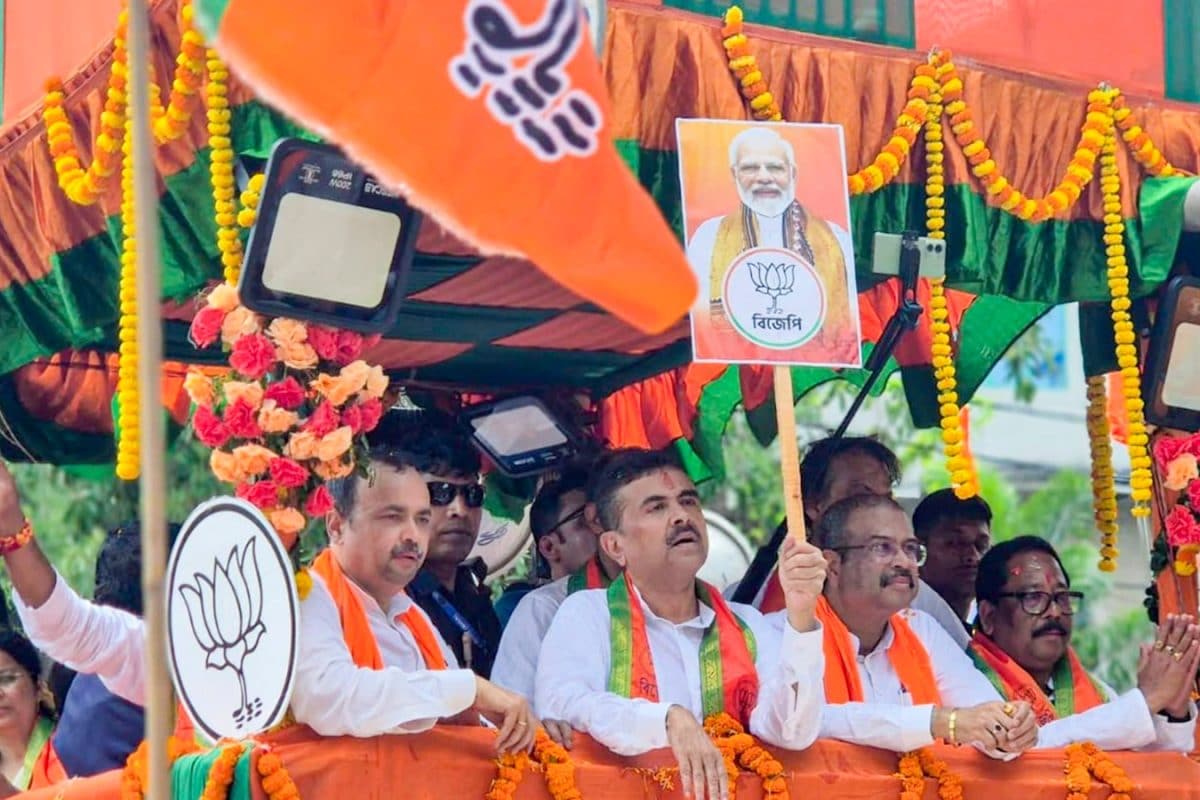
Opinion | BJP’s Quiet Tactical Shifts For 2026 Bengal Polls The BJP’s recalibration aims to convert anti-incumbency against local TMC functionaries into tangible gains without triggering cultural backlash The 2026 West Bengal Assembly election represents a defining moment for the Bharatiya Janata Party (BJP) in its long-standing effort to challenge the dominance of the Trinamool Congress (TMC) led by Mamata Banerjee. With polling scheduled in two phases on April 23 and 29, the BJP has already released two lists of candidates—144 in the first and 111 in the second—covering a significant portion of the 294 seats. This do-or-die battle comes after the party’s 2021 performance, where it secured 77 seats but fell short of dislodging the TMC. Central leaders like Prime Minister Narendra Modi and Home Minister Amit Shah remain prominent, yet subtle shifts in the BJP’s approach signal a more calibrated strategy tailored to Bengal’s complex socio-political landscape. Significantly, this recalibration was reinforced on Saturday when Amit Shah visited the state to review the party’s election strategy. During his visit, he held extensive interactions with state leaders and organisational functionaries, assessing both macro-level messaging and micro-level booth management. The leadership also used the occasion to release a detailed chargesheet against the Mamata Banerjee-led TMC government, aiming to streamline the campaign narrative across both broader political messaging and targeted local interventions. These adjustments move away from the heavy reliance on national narratives seen previously, emphasising instead localised execution, issue selection, internal cohesion, and cultural sensitivity. The TMC, while maintaining its grip through welfare schemes and regional identity politics, appears less attuned to these granular changes, which are unfolding largely at the booth and district levels. In rural pockets where Mamata Banerjee retains personal popularity, frontal assaults on her or national security themes risk alienating voters. The BJP’s recalibration aims to convert anti-incumbency against local TMC functionaries into tangible gains without triggering cultural backlash. Embracing Decentralised Campaign Management In the 2021 elections, the BJP’s campaign leaned heavily on star power from the central leadership, with rallies by Modi and Shah drawing massive crowds but often failing to translate into sustained booth-level mobilisation in rural and semi-urban areas. For 2026, the party has deliberately distributed responsibility across district and local leaders, allowing them to tailor strategies to specific ground realities. This decentralisation enables finer focus on hyper-local grievances—potable water shortages in certain blocks, erratic power supply in agrarian belts, or dilapidated rural roads—rather than broad-brush national issues. Local leaders now orchestrate door-to-door outreach and small-scale meetings, identifying pocket-specific problems stemming from alleged TMC mismanagement at the panchayat or municipal level. This bottom-up model contrasts with the top-down approach of five years ago and mirrors successful organisational tactics the BJP has employed in other states where it scaled from opposition to power. By empowering regional faces, the party mitigates the perception of being an “outsider" force and builds ownership among cadre who understand dialectal nuances and caste-community dynamics better than visiting national leaders. Early candidate selections, including figures with strong local roots, further reinforce this structure. The result is a campaign that feels less like a Delhi-directed spectacle and more like an organic response to daily hardships faced by voters in districts such as Purba Bardhaman, Paschim Medinipur, or North 24 Parganas. Shifting from Macro Narratives to Micro Local Issues A noticeable pivot lies in the BJP’s issue prioritisation. Previously, the Bengal unit frequently highlighted national security, infiltration concerns, or atrocities against Hindus in neighbouring Bangladesh to consolidate certain voter segments. While these themes have not vanished entirely, the ground-level campaign now foregrounds immediate, tangible failures: broken culverts, irregular healthcare services at block primary health centres, teacher vacancies in government schools, and irrigation deficits affecting small farmers. The party meticulously documents instances of alleged corruption or negligence by local TMC leaders—municipal councillors or panchayat pradhans—rather than launching sweeping attacks on Mamata Banerjee or her nephew Abhishek Banerjee. This micro-focus stems from an understanding that Banerjee’s popularity in rural Bengal is intertwined with schemes like Kanyashree, Swasthya Sathi, or Lakshmir Bhandar, making direct personal criticism counterproductive. Instead, the BJP contrasts local delivery failures—“why does your village road remain kutcha after years of promises?"—with pledges of better infrastructure and governance. Such messaging resonates in areas where anti-incumbency brews against specific TMC satraps accused of high-handedness or fund diversion. By avoiding national security as the primary talking point on the ground, the party sidesteps accusations of communal polarisation that the TMC readily weaponises. The strategy acknowledges Bengal’s voters often prioritise “roti, kapda, makan" variants—roads, electricity, water, health, and education—over abstract ideological battles when casting ballots for the state assembly. Projecting Party Unity Through Inclusive Gestures Internal cohesion has long been a vulnerability for the BJP in Bengal, with public spats between old guards and newer leadership surfacing periodically. For 2026, the party has worked visibly to project unity. Former state presidents Tathagata Roy and Dilip Ghosh, who once expressed marginalisation, appeared prominently at the recent Brigade Parade Ground rally addressed by PM Modi. Ghosh, who had publicly complained about being excluded from key meetings, received personal attention from the Prime Minister on stage, sending a strong visual signal of reconciliation. Several veterans from earlier phases of the party’s growth have been accommodated with tickets or prominent campaign roles. This deliberate inclusion aims to heal rifts that plagued the organisation post-2021. By showcasing a “family photo" of diverse BJP leaders—long-time loyalists alongside recent entrants—the party counters the TMC’s narrative of a divided opposition. On the ground, workers are instructed to emphasise collective strength rather than factional loyalties. The message is clear: past differences have been set aside for the larger goal of “Parivartan" in Bengal. Such optics matter in a state where personal equations among leaders influence cadre morale and voter perception of stability. A unified front also reassures potential allies and swing voters wary of backing a seemingly fractious outfit. While ticket distribution has sparked localised protests in some districts, the overarching effort to subsume egos under a common banner represents a quiet but significant maturation in the Bengal unit’s functioning. Sayantan Ghosh is the author of two books, Battleground Bengal and The Aam Aadmi Party, and teaches at St Xavier’s College (Autonomous), Kolkata. Views expressed in the above piece are personal and solely those of the author. They do not necessarily reflect News18’s views.