




New African Species of Magic Mushroom Reveals Insights into Global Distribution
Magic mushrooms: new African species sheds light on the history of the famous fungus
 theconversation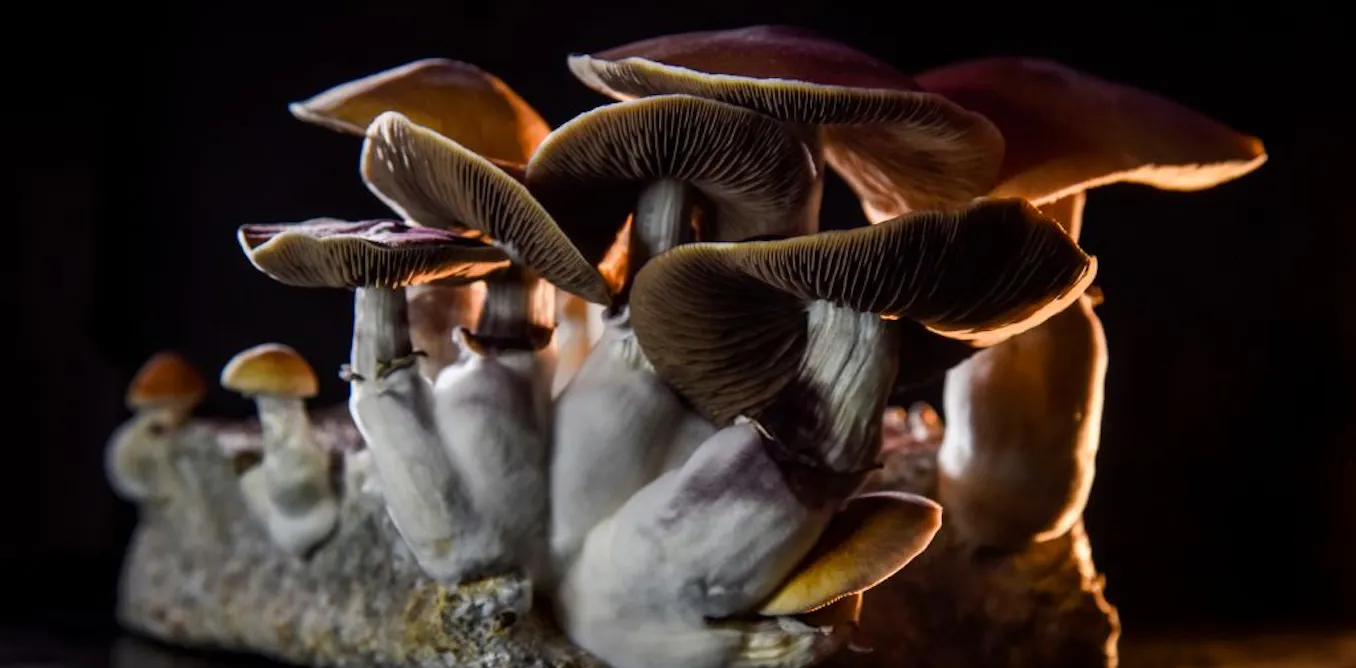
Image: theconversation
Researchers have identified a new species of magic mushroom, Psilocybe ochraceocentrata, in South Africa and Zimbabwe, shedding light on the evolutionary history of the well-known Psilocybe cubensis. This study suggests that P. cubensis may have originated in Africa or Asia and spread globally, potentially through human activities during colonization.
- 01Discovery of Psilocybe ochraceocentrata in South Africa and Zimbabwe provides new insights into the origins of Psilocybe cubensis.
- 02The study suggests multiple potential pathways for the global dispersal of P. cubensis, including human transport during colonization.
- 03Fieldwork and genomic analysis indicate that P. ochraceocentrata and P. cubensis may share a common ancestor dating back approximately 1.56 million years.
- 04The research highlights Africa's underrepresentation in fungal diversity studies despite its rich biodiversity.
- 05Future studies are necessary to further explore fungal diversity in Africa and its ecological implications.
Advertisement
In-Article Ad
A recent study has identified a new species of magic mushroom, Psilocybe ochraceocentrata, found in South Africa and Zimbabwe, which aids in understanding the evolutionary history of the globally recognized Psilocybe cubensis. This research utilized extensive fieldwork and genomic techniques to explore the origins of P. cubensis, suggesting it may have originated in Africa or Asia rather than the Americas. The findings indicate that P. ochraceocentrata and P. cubensis likely diverged from a common ancestor around 1.56 million years ago, coinciding with the expansion of grasslands and herbivore populations. The study proposes several scenarios for the dispersal of P. cubensis, including transport by cattle during European colonization and natural environmental factors. Despite the discovery, Africa remains under-sampled in terms of fungal diversity, with fewer than ten Psilocybe species officially described. The authors emphasize the need for further research to map local fungal diversity in Africa, which is crucial for ecological conservation efforts.
Advertisement
In-Article Ad
This research enhances understanding of the ecological roles and evolutionary history of fungi in Africa, potentially guiding conservation efforts and future studies.
Advertisement
In-Article Ad
Reader Poll
How important do you think it is to study fungal diversity in Africa?
Connecting to poll...
Read the original article
Visit the source for the complete story.