
Ray Dalio Warns of Prolonged Global Conflict Impacting Stock Markets
'We are in a World War that isn't going to end:' Ray Dalio sounds alarm that stocks are not pricing the risk
 The Economic Times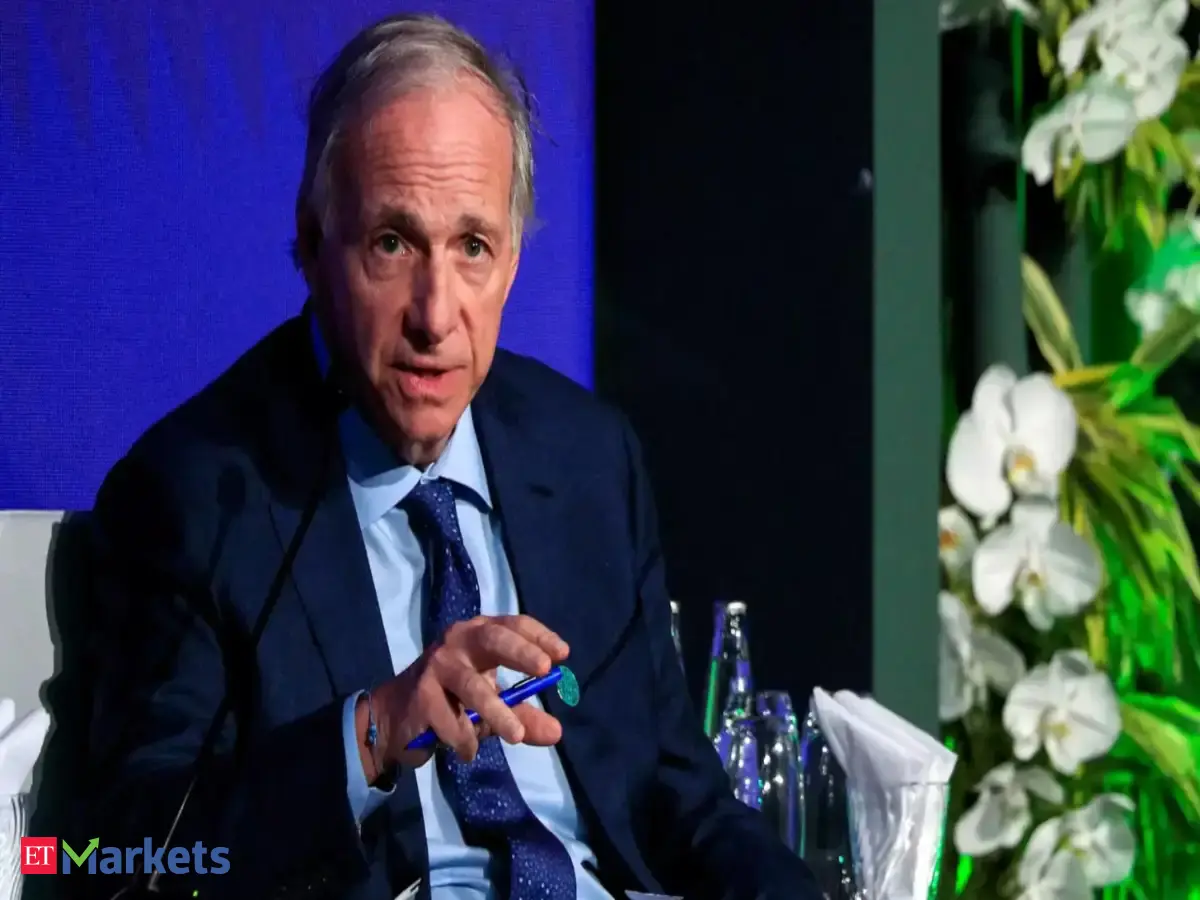
Image: The Economic Times
Veteran investor Ray Dalio cautions that global markets may be underestimating the risks of ongoing geopolitical conflicts, particularly the US-Israel-Iran tensions. He suggests that these conflicts could lead to a prolonged period of instability, affecting asset prices and market returns significantly.
- 01Ray Dalio warns that current geopolitical tensions may lead to a prolonged conflict, reshaping global markets.
- 02Investors are focusing on short-term events while ignoring deeper, structural shifts in global dynamics.
- 03Dalio compares the current situation to the lead-up to World Wars I and II, indicating potential for escalation.
- 04The US's military commitments and alliances are under strain, affecting its global dominance.
- 05Energy dynamics and economic pressures will significantly influence market trajectories moving forward.
Advertisement
In-Article Ad
Ray Dalio, a prominent investor, has raised alarms about the potential underestimation of geopolitical risks by global markets. In a recent post on X, he highlighted that investors are overly fixated on immediate conflicts, such as the US-Israel-Iran tensions, while neglecting broader structural changes that could lead to a prolonged period of instability. Dalio likened the current geopolitical climate to the prelude of World Wars I and II, suggesting that the world is in a transition from a pre-fighting to a fighting stage. He emphasized the interconnected nature of global conflicts, which span Eastern Europe, the Middle East, and Asia, creating a classic world war dynamic without a formal declaration.
Dalio expressed concern over the United States' military commitments, which could lead to overextension and vulnerability. He noted the importance of alliances, with countries like China and Russia increasingly aligning with Iran, contrasting with the US and its allies. Additionally, he pointed out that disruptions in energy routes, such as the Strait of Hormuz, could exacerbate global volatility. Dalio further connected the current environment to his concept of the Big Cycle, driven by forces like debt, political divisions, and external shocks. He advised investors to reconsider traditional assumptions about market stability and to focus on long-term indicators rather than short-term headlines, especially as rising oil prices and inflation pressures already weigh on global equities.
Advertisement
In-Article Ad
Investors may need to reassess their portfolios as geopolitical tensions could lead to increased market volatility and lower returns.
Advertisement
In-Article Ad
Reader Poll
Do you believe current geopolitical tensions will significantly impact global stock markets?
Connecting to poll...
Read the original article
Visit the source for the complete story.