




Justice Vikram Nath Advocates for Live Streaming in Courts to Enhance Legal Literacy
Live streaming strengthens accountability, an effective tool for improving legal literacy: Justice Vikram Nath
 The Indian Express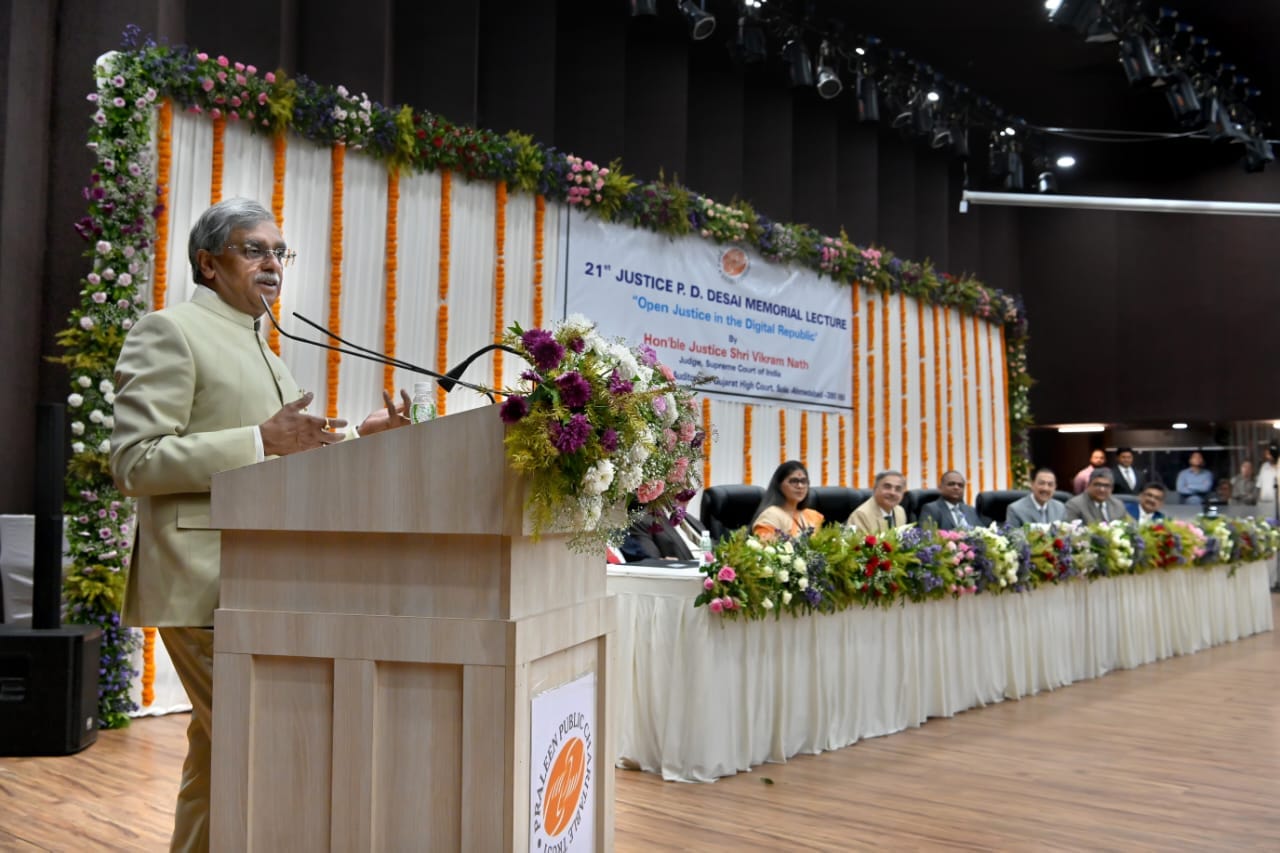
Image: The Indian Express
Justice Vikram Nath of the Supreme Court emphasized the importance of live streaming court proceedings during the 21st Justice PD Desai Memorial Lecture in Gujarat, India. He argued that technology can enhance public access to justice and improve legal literacy, while also addressing concerns about transparency and accountability within the judicial system.
- 01Live streaming can enhance public access to court proceedings and improve legal literacy.
- 02Justice Vikram Nath initiated live streaming in Gujarat High Court, a first in India.
- 03Concerns about transparency and accountability in live streaming should be addressed, not avoided.
- 04Artificial intelligence can aid in making court proceedings more accessible but should not replace human oversight.
- 05Justice Nath aims for live streaming to become a norm in the Supreme Court by 2027.
Advertisement
In-Article Ad
During the 21st Justice PD Desai Memorial Lecture at the Gujarat High Court, Justice Vikram Nath of the Supreme Court advocated for live streaming of court proceedings as a means to enhance transparency and legal literacy. He highlighted that technology can extend public access to justice without compromising dignity and fairness, thus aligning with the constitutional promise of open courts. Justice Nath, who initiated live streaming in Gujarat in July 2021, noted that the digital age has transformed public participation, making it essential to adapt the concept of open justice to include virtual access. He acknowledged concerns from the legal community about the potential for misinterpretation of live-streamed content but argued that these challenges should lead to better design and public education rather than a retreat from transparency. Justice Nath also discussed the role of artificial intelligence in enhancing open justice, emphasizing that while AI can improve accessibility, human responsibility must remain central to the judicial process. He expressed his aspiration for live streaming to become a standard practice in the Supreme Court by September 2027, promoting a culture of openness and accountability in the Indian legal system.
Advertisement
In-Article Ad
Live streaming of court proceedings can significantly improve public understanding of the legal system, making it more accessible to citizens across India.
Advertisement
In-Article Ad
Reader Poll
Do you support live streaming of court proceedings to enhance public access to justice?
Connecting to poll...
More about Supreme Court of India
Read the original article
Visit the source for the complete story.