



Ancient Fossil Discovery Redefines Spider Ancestry
This tiny claw in a 500-million-year-old fossil just rewrote the origin of spiders
 Science Daily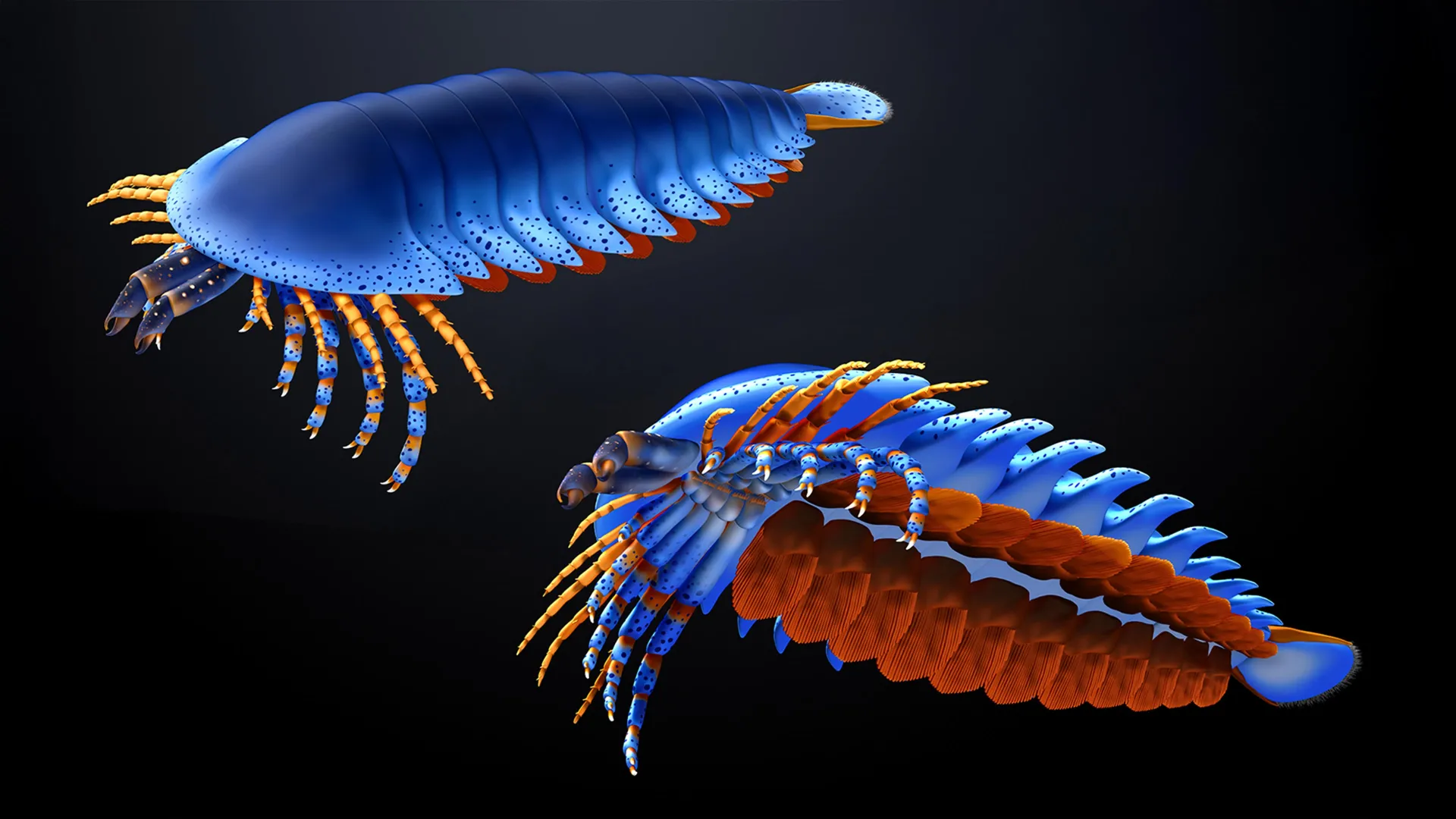
Image: Science Daily
A 500-million-year-old fossil discovered in Utah's West Desert has revealed the earliest known relative of spiders, Megachelicerax cousteaui, pushing back the origin of chelicerates by 20 million years. This finding highlights the early emergence of key anatomical features seen in modern spiders and horseshoe crabs during the Cambrian Explosion.
- 01Megachelicerax cousteaui is the oldest known chelicerate, discovered in Utah, USA.
- 02This fossil pushes back the origin of chelicerates by 20 million years to 500 million years ago.
- 03The discovery provides evidence of early anatomical features of modern spiders and horseshoe crabs.
- 04The fossil was meticulously studied, revealing a claw, which is a defining characteristic of chelicerates.
- 05The species is named after Jacques Cousteau to honor his contributions to marine life awareness.
Advertisement
In-Article Ad
Researchers have identified a new species, Megachelicerax cousteaui, from a 500-million-year-old fossil found in Utah's West Desert, which is now recognized as the earliest known chelicerate. This discovery extends the history of chelicerates, which include spiders and horseshoe crabs, by 20 million years. The fossil showcases a claw, the first clear evidence of a chelicera from the Cambrian period, indicating that important anatomical features of modern chelicerates were already developing during this time. The study, published in *Nature*, emphasizes the complexity of early arthropods and their evolutionary significance. The fossil was painstakingly uncovered over 50 hours of work, revealing intricate structures that suggest a transitional form between earlier arthropods and later species. Named after the famed marine explorer Jacques Cousteau, this finding underscores the importance of museum collections in advancing scientific knowledge and highlights how chelicerates have influenced ecosystems and human life throughout history.
Advertisement
In-Article Ad
This discovery enhances our understanding of the evolutionary history of chelicerates, which could influence future research in paleontology and evolutionary biology.
Advertisement
In-Article Ad
Reader Poll
How important do you think fossil discoveries are for understanding evolution?
Connecting to poll...
More about Harvard University
Read the original article
Visit the source for the complete story.