




RBI Highlights Economic Risks from Iran Conflict Impacting India
Crude oil, remittances & exports: RBI spells out where the Iran war bites India
 The Economic Times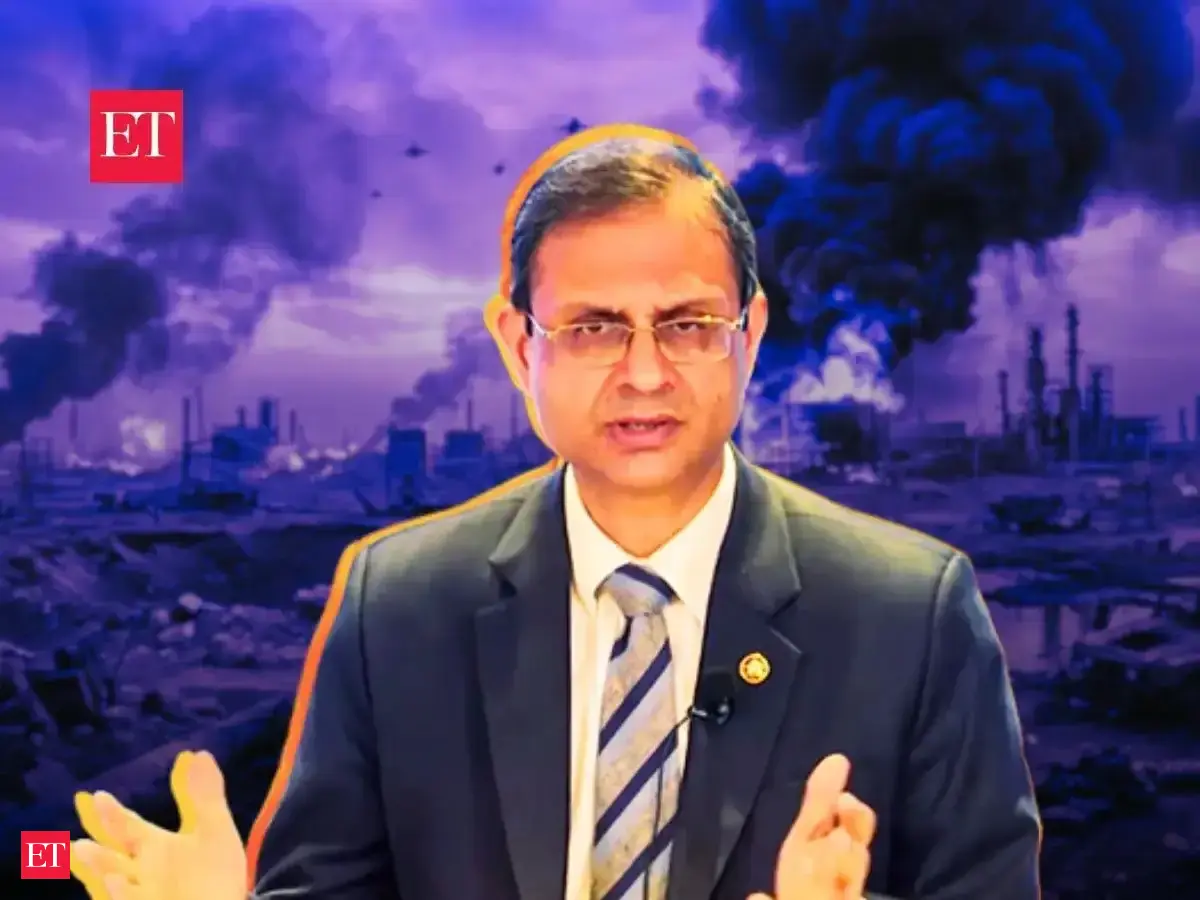
Image: The Economic Times
The Reserve Bank of India (RBI) has outlined the potential economic risks stemming from the ongoing conflict in West Asia, particularly emphasizing the impact of rising crude oil prices, weakened exports, and remittances. While India's macroeconomic fundamentals remain strong, the RBI warns that external factors could intensify inflation and trade deficits if the situation worsens.
- 01Rising crude oil prices could increase imported inflation and widen the current account deficit.
- 02Merchandise exports are facing challenges due to weak global demand and rising logistical costs.
- 03Remittances from overseas workers are critical for stabilizing India's external account but may decline due to global economic stress.
- 04The RBI maintained the repo rate at 5.25%, balancing growth and inflation risks amid geopolitical tensions.
- 05India's GDP growth is projected at 7.6% for 2025-26, but external headwinds may moderate this pace.
Advertisement
In-Article Ad
The Reserve Bank of India (RBI) has provided an in-depth analysis of the economic implications of the ongoing conflict in West Asia, particularly highlighting the risks associated with rising crude oil prices, which could lead to increased imported inflation and a widening current account deficit. RBI Governor Sanjay Malhotra noted that while India's macroeconomic fundamentals are strong, the economy is experiencing a supply shock that necessitates cautious monitoring of the evolving growth-inflation outlook. The central bank has kept the repo rate unchanged at 5.25%, reflecting a careful balance between sustaining growth and managing inflation risks in a volatile global environment.
India's dependence on imported crude oil means that even slight increases in global oil prices can significantly affect inflation expectations and fiscal balances. The RBI reported that merchandise exports are facing dual challenges from weak external demand and rising logistical costs, with a slight contraction of 0.2% year-on-year observed in early data. Meanwhile, remittances continue to support household incomes and the foreign exchange situation, but prolonged global economic stress could threaten these inflows.
Despite these challenges, the RBI forecasts a robust GDP growth of 7.6% for 2025-26, driven by private consumption and investment. However, external headwinds, including higher energy prices and potential global demand slowdowns, are expected to moderate growth in the coming years. The central bank remains vigilant, ready to adjust its policy stance as necessary in response to global developments.
Advertisement
In-Article Ad
Higher crude oil prices could lead to increased costs for consumers and businesses, potentially raising prices for goods and services. This may strain household budgets and affect overall economic growth.
Advertisement
In-Article Ad
Reader Poll
How concerned are you about the impact of global conflicts on India's economy?
Connecting to poll...
More about Reserve Bank of India
Read the original article
Visit the source for the complete story.