



New Insights into the Formation of Earth's Strongest Ocean Current
Earth’s most powerful ocean current didn’t form the way we thought
 Science Daily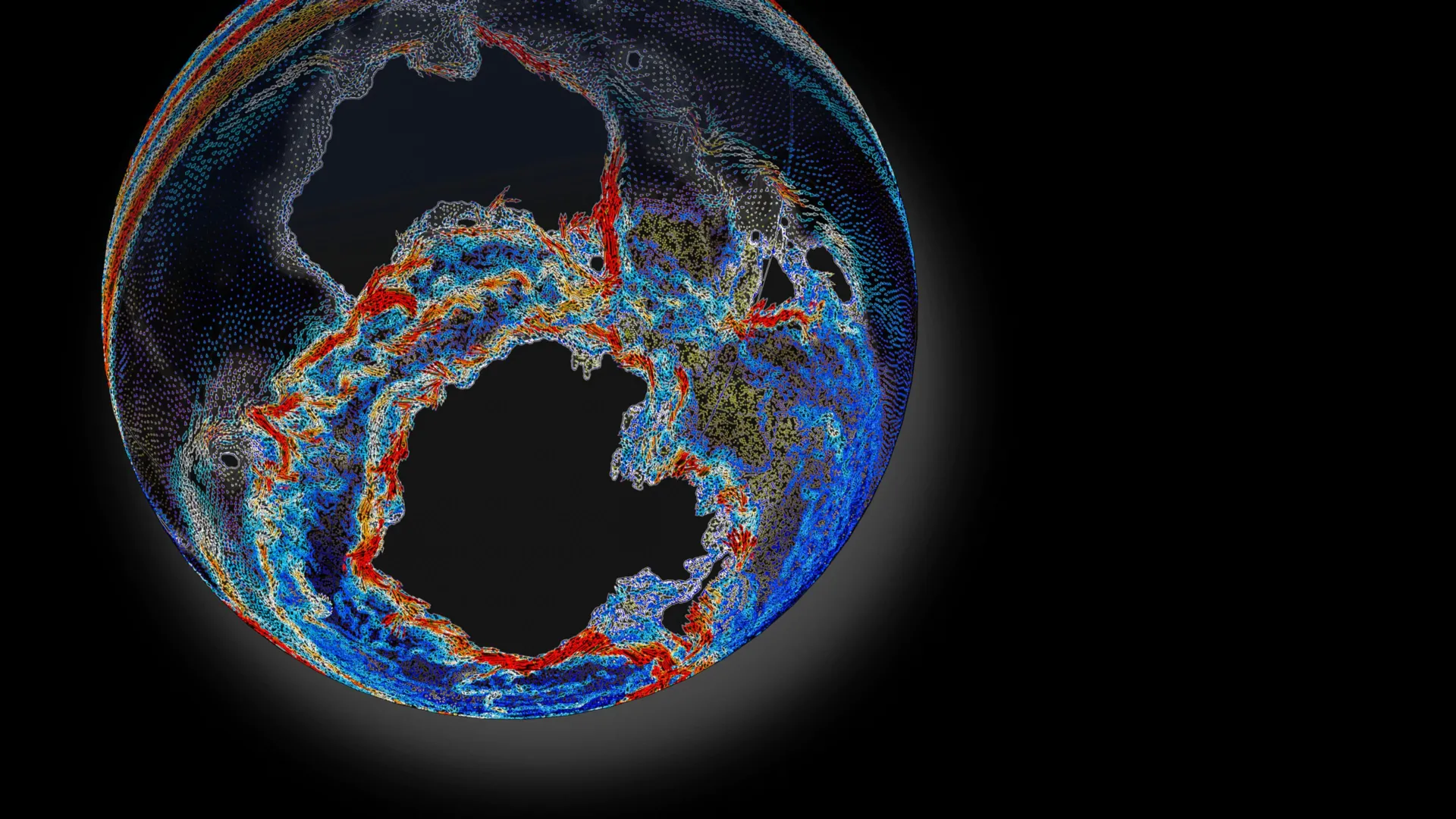
Image: Science Daily
Research reveals that the Antarctic Circumpolar Current, the strongest ocean current on Earth, formed through a complex interplay of shifting continents and wind patterns, rather than merely opening ocean gateways. This current played a crucial role in reducing atmospheric carbon dioxide, contributing to a significant cooling event around 34 million years ago.
- 01The Antarctic Circumpolar Current (ACC) is the strongest ocean current, surpassing all rivers combined.
- 02Its formation was influenced by continental shifts and wind patterns, not just open ocean gateways.
- 03Around 34 million years ago, the ACC's development contributed to a major cooling event on Earth.
- 04The study utilized advanced climate simulations to reconstruct the ACC's formation.
- 05Understanding the ACC's history can provide insights into future climate changes.
Advertisement
In-Article Ad
A recent study published in the *Proceedings of the National Academy of Sciences* reveals that the Antarctic Circumpolar Current (ACC), the most powerful ocean current on Earth, formed through a complex interplay of geological and atmospheric factors rather than merely the opening of ocean gateways. Approximately 34 million years ago, during the transition to the Oligocene epoch, significant shifts in continental positions and strong westerly winds in the Tasman Gateway between Antarctica and Australia facilitated the current's development. This transition marked a significant cooling period, pulling atmospheric carbon dioxide levels down from about 600 ppm, a level not seen since. The research highlights the ACC's role in driving carbon uptake by the ocean, which contributed to the cooler climate of the Cenozoic Ice Age. By employing advanced climate simulations, the study provides new insights into how ocean currents and continental shifts have historically influenced Earth's climate, offering valuable context for understanding future climate scenarios.
Advertisement
In-Article Ad
Understanding the formation of the ACC can help predict future climate changes and their potential effects on global weather patterns and ecosystems.
Advertisement
In-Article Ad
Reader Poll
How concerned are you about the impact of ocean currents on climate change?
Connecting to poll...
Read the original article
Visit the source for the complete story.