


Proposed Changes to Women's Reservation and Delimitation in Union Territories
Women’s Reservation & Delimitation: What Will Change For UTs Puducherry, Delhi, J&K? How Many Seats Will They Get?
 News 18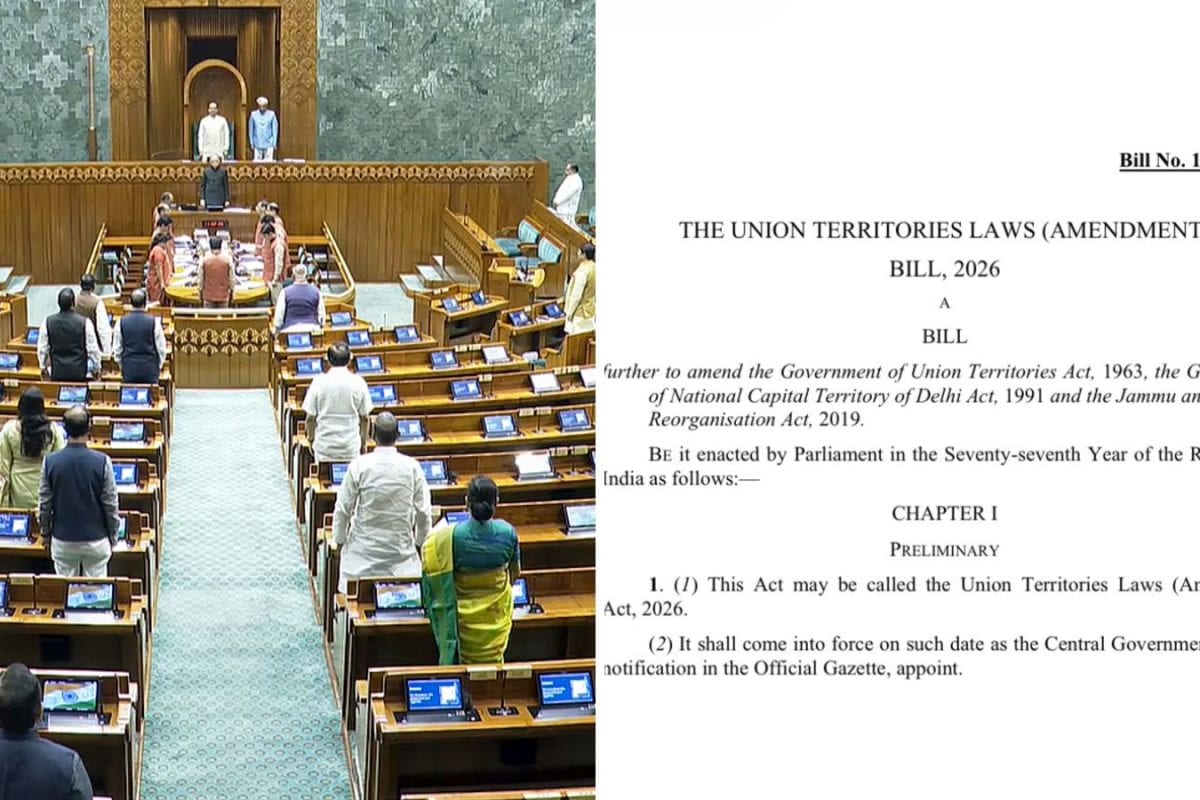
Image: News 18
The Union Territory Laws (Amendment) Bill 2026 aims to align laws for Puducherry, Delhi, and Jammu & Kashmir with new delimitation rules and women's reservation policies. Key changes include increasing nominated assembly seats and defining 'population' for reservations, impacting the electoral landscape in these regions.
- 01The Union Territory Laws (Amendment) Bill 2026 updates laws for Puducherry, Delhi, and Jammu & Kashmir.
- 02Puducherry's assembly will have five nominated members, with at least two being women.
- 03The bill allows the Delimitation Commission to redraw constituencies based on flexible census data.
- 04Delhi's assembly will have a minimum of 70 members, while Jammu & Kashmir's will have at least 114.
- 05The bill aligns women's reservation in Union Territories with Article 334A of the Indian Constitution.
Advertisement
In-Article Ad
The Union Territory Laws (Amendment) Bill 2026, set for discussion during the special session from April 16-18, proposes significant updates to the electoral framework for Puducherry, Delhi, and Jammu & Kashmir. This bill aims to synchronize existing laws with new delimitation rules and women's reservation policies as outlined in Article 334A of the Indian Constitution. Notably, it seeks to increase the number of nominated members in the Puducherry Assembly to five, ensuring at least two are women. The bill also empowers the Delimitation Commission to redraw assembly and parliamentary constituencies, which will be based on a flexible definition of 'population' rather than a fixed census year. For the assemblies, Delhi is mandated to have a minimum of 70 members, while Jammu & Kashmir will have at least 114 members. The bill maintains the current rule regarding the 24 seats reserved for Pakistan-occupied areas, keeping them vacant until those regions can elect representatives. Overall, the amendments are designed to modernize the legal framework, ensuring consistency and clarity in the electoral process.
Advertisement
In-Article Ad
These changes will enhance women's representation in local governance and redefine electoral boundaries, potentially influencing political dynamics in these Union Territories.
Advertisement
In-Article Ad
Reader Poll
Do you support the proposed changes to women's reservation and delimitation in Union Territories?
Connecting to poll...
Read the original article
Visit the source for the complete story.