



Balancing Urban Development: Preserving History vs. Building New Cities
Designing cities: should we build from scratch or keep history alive?
 theconversation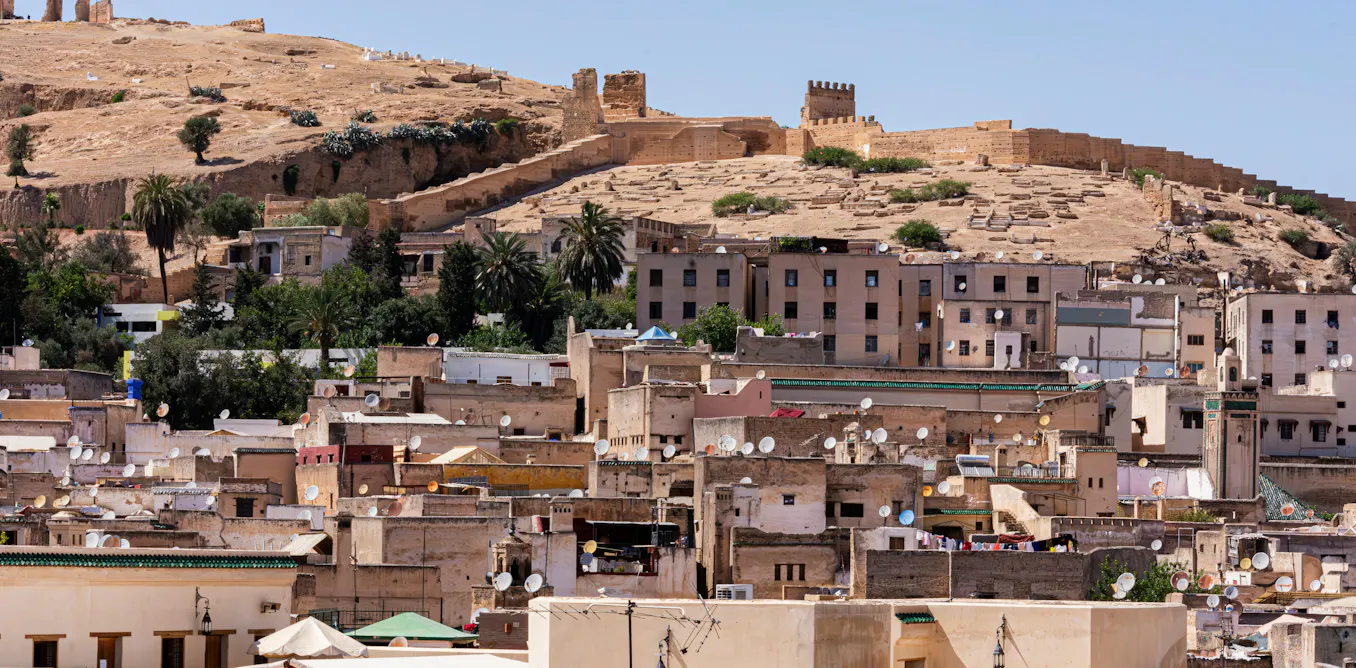
Image: theconversation
Urban transformation today presents a complex challenge of balancing historical preservation with modern development. While cities like Fez, Morocco, showcase layers of history, rapid urbanization threatens to erase these memories. Understanding the interaction between memory and transformation is crucial for creating cities that honor their past while adapting to future needs.
- 01Cities are living archives, reflecting layers of history and culture.
- 02Rapid urban development often leads to the erasure of historical neighborhoods.
- 03The concept of 'tabula rasa' suggests a blank slate approach, but urban spaces are never truly empty.
- 04Cities should be designed to integrate historical memory with modern needs.
- 05A flexible, context-sensitive design approach can help balance preservation and development.
Advertisement
In-Article Ad
Cities are often viewed as living archives, showcasing layers of history through their architecture and urban design. However, rapid urban transformation threatens to erase these historical layers, as seen in places like Cairo and St. Louis, where neighborhoods have been replaced by modern developments. This article argues against the simplistic dichotomy of preserving the past versus starting anew, suggesting that urban design should embrace a dynamic relationship between memory and transformation. Historical memory is not static; it evolves through interpretation and design. By adopting strategies that incorporate historical traces into contemporary urban life, cities can honor their past while meeting modern needs. Examples from cities like Lugano, Switzerland, highlight how integrating historical elements can create vibrant urban spaces. The future of urban design must navigate the challenges of rapid change while remaining sensitive to the historical context, ensuring that cities continue to reflect their unique identities.
Advertisement
In-Article Ad
The ongoing transformation of urban environments can significantly affect local communities, altering their cultural identity and social networks.
Advertisement
In-Article Ad
Reader Poll
What should be prioritized in urban development?
Connecting to poll...
Read the original article
Visit the source for the complete story.