
Ancient Fossil Reclassified: World's 'Oldest' Octopus Turns Out to Be a Nautiloid
World's 'Oldest' Octopus Was Not Even An Octopus. New Scans Reveal What It Was
 Ndtv
Ndtv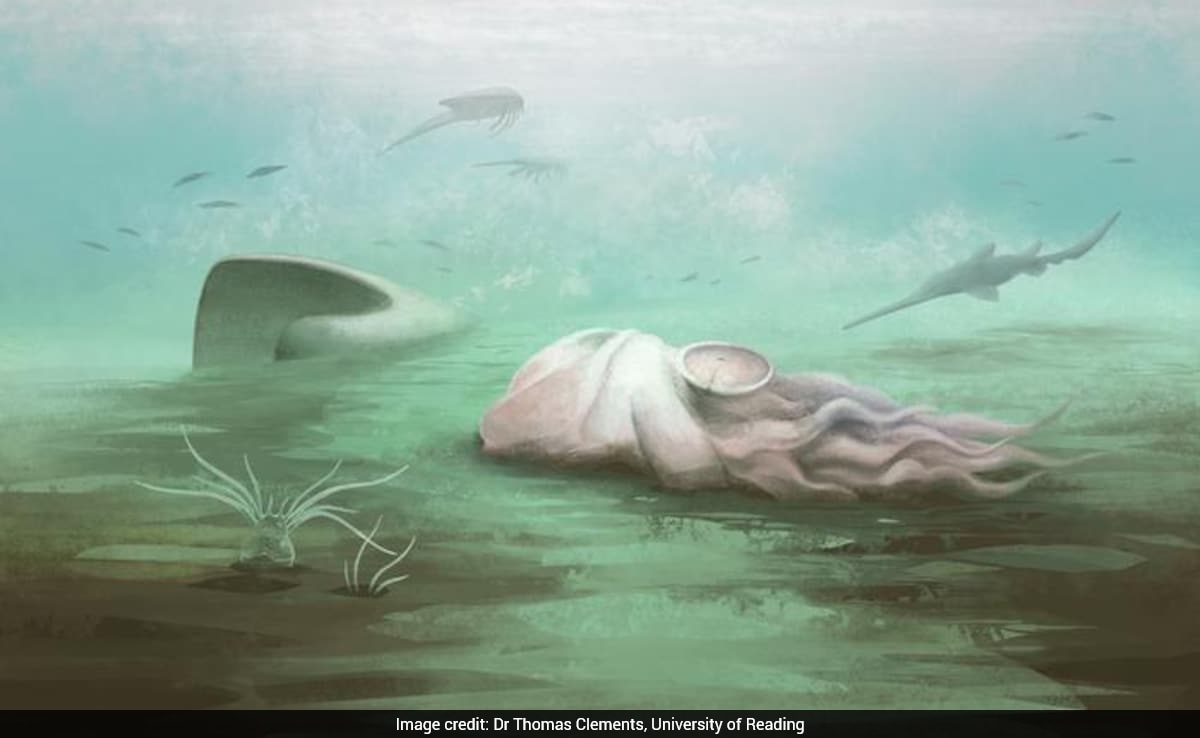
Image: Ndtv
A 300-million-year-old fossil, initially thought to be the oldest octopus, has been reclassified as a nautiloid, a shelled cephalopod related to modern Nautilus species. This discovery, made using advanced imaging techniques, alters our understanding of cephalopod evolution and suggests octopuses evolved much later.
- 01The fossil Pohlsepia mazonensis was misidentified as an octopus for 25 years.
- 02Advanced synchrotron imaging revealed it is actually a nautiloid.
- 03This reclassification pushes back the record of nautiloid soft tissue preservation by 220 million years.
- 04The findings suggest that octopuses evolved later, likely during the Jurassic period.
- 05The study emphasizes the importance of re-evaluating fossils with modern techniques.
Advertisement
In-Article Ad
A fossil known as Pohlsepia mazonensis, previously labeled as the world's oldest octopus, has been reclassified as a nautiloid, a type of shelled cephalopod related to modern Nautilus species. Discovered in Illinois, the fossil was initially thought to be an octopus due to its eight arms and fin-like structures. However, recent research employing advanced synchrotron imaging revealed a row of tiny tooth-like structures known as a radula, characteristic of molluscs. The radula contained 11 tooth-like elements per row, aligning with nautiloids, while octopuses typically have seven or nine. Dr. Thomas Clements, the lead author and a lecturer in Invertebrate Zoology at the University of Reading, stated, “It turns out the world's most famous octopus fossil was never an octopus at all.” This reclassification not only resolves a long-standing puzzle in octopus evolution but also suggests that octopuses evolved much later than previously thought, likely during the Jurassic period. The study underscores the significance of utilizing modern techniques to revisit and reassess controversial fossils, leading to groundbreaking discoveries.
Advertisement
In-Article Ad
Advertisement
In-Article Ad
Reader Poll
Do you think re-evaluating fossils with modern technology is important for scientific progress?
Connecting to poll...
Read the original article
Visit the source for the complete story.