
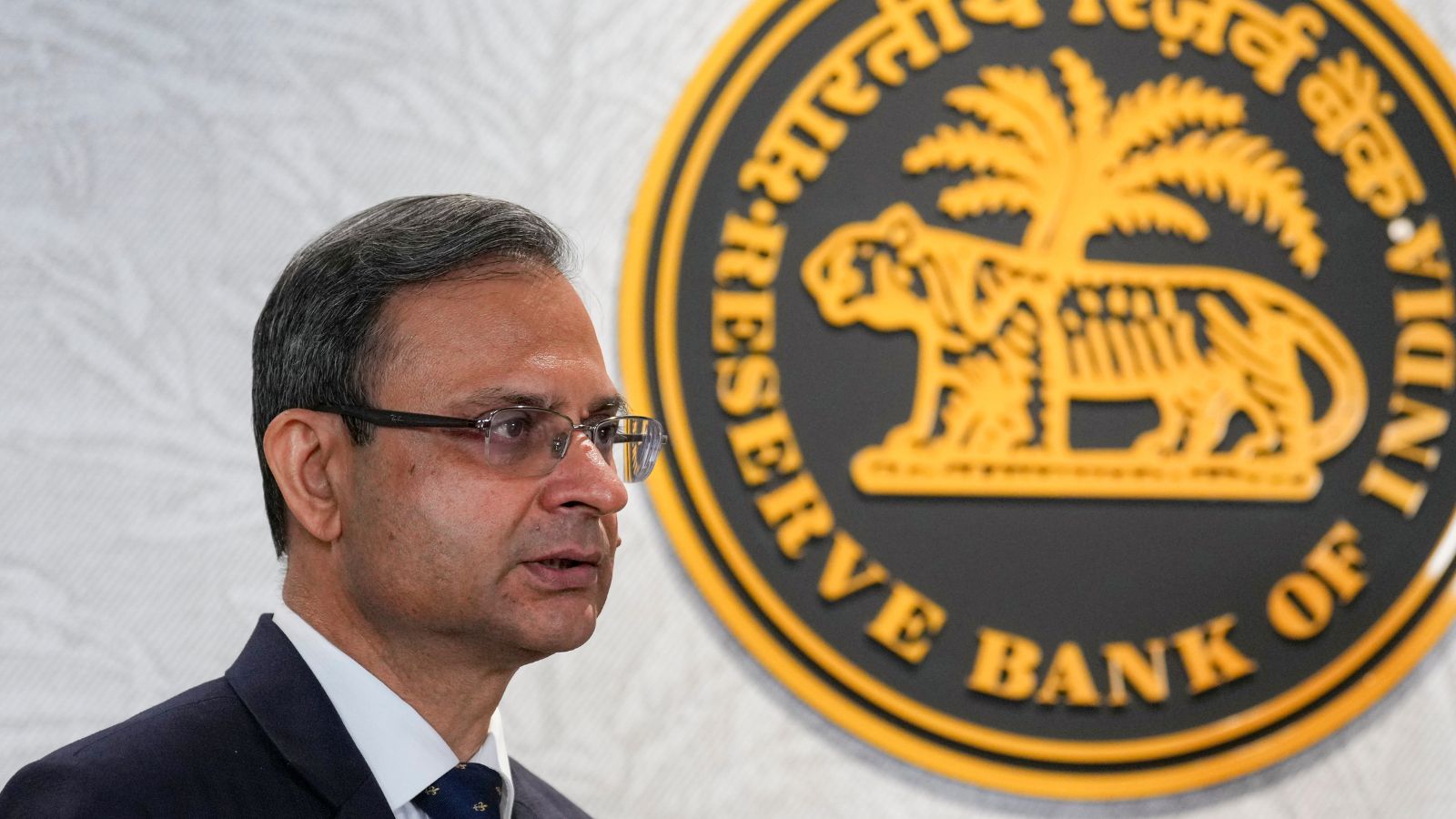




Indian Rupee Depreciates 6.2% Against US Dollar Amid Global Tensions
INR depreciated by 6.2% against the US dollar in H2 though modest current account deficit and robust foreign exchange reserves support: RBI
 Business Standard
Image: Business Standard
The Indian rupee (INR) depreciated by 6.2% against the US dollar in the second half of 2026, influenced by geopolitical tensions in West Asia and persistent foreign portfolio investor outflows. Despite this decline, the INR remains one of the least volatile emerging market currencies, supported by a modest current account deficit and strong foreign exchange reserves.
- 01INR depreciated by 6.2% against the US dollar in H2 2026.
- 02Depreciation pressures increased due to geopolitical tensions in West Asia.
- 03RBI introduced measures to limit speculative positioning in the foreign exchange market.
- 04Despite volatility, INR remains among the least volatile emerging market currencies.
- 05Baseline exchange rate assumption revised to ₹94 per US dollar.
Advertisement
In-Article Ad
The Indian rupee (INR) faced significant depreciation pressures, dropping by 6.2% against the US dollar in the second half of 2026, primarily due to escalating conflicts in West Asia and persistent outflows from foreign portfolio investors. In March 2026, the INR breached ₹95 per US dollar intraday, marking a new low. To stabilize the currency, the Reserve Bank of India (RBI) implemented a prudential measure on March 27, limiting the net open position in INR for authorized dealers to US$ 100 million at the end of each business day. Despite the heightened volatility, the INR has been supported by a modest current account deficit and robust foreign exchange reserves, making it one of the least volatile currencies among emerging markets. Consequently, the RBI revised its baseline exchange rate assumption to ₹94 per US dollar, up from ₹88 in the previous report.
Advertisement
In-Article Ad
The depreciation of the INR may lead to increased costs for imports, affecting consumers and businesses reliant on imported goods. This could also impact inflation rates and overall economic stability.
Advertisement
In-Article Ad
Reader Poll
How do you feel about the current state of the Indian rupee?
Connecting to poll...
More about Reserve Bank of India
Read the original article
Visit the source for the complete story.