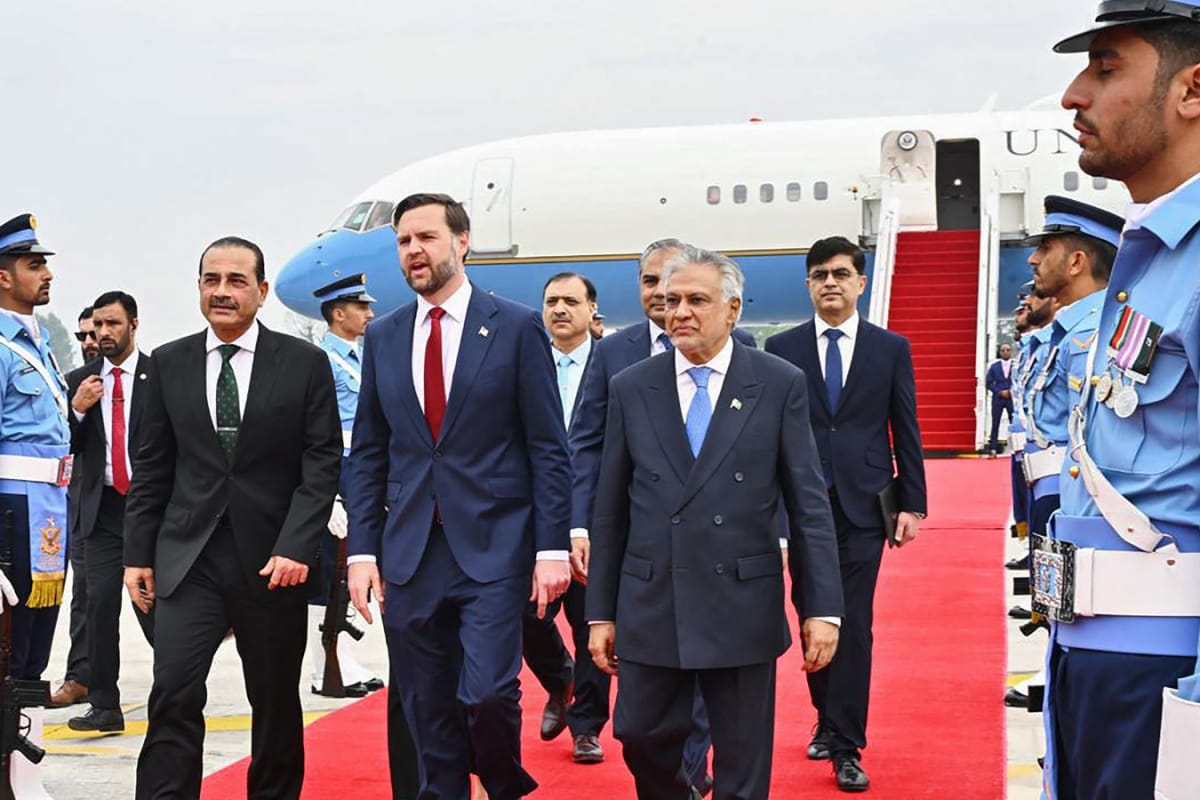


The Failed US-Iran Talks in Islamabad: A Historical Perspective
How Pakistan got to host US-Iran talks
 Hindustan Times
Image: Hindustan Times
Context
The recent talks between the United States and Iran aimed at resolving ongoing tensions were held in Islamabad, Pakistan. This meeting reflects Pakistan's complex historical role in regional geopolitics, particularly its alliances and conflicts with neighboring countries and global powers.
What The Author Says
The author argues that the recent US-Iran talks in Islamabad were doomed to fail due to historical geopolitical dynamics and Pakistan's ineffectual hosting.
Key Arguments
📗 Facts
- The US-Iran talks in Islamabad aimed to address ongoing tensions but ultimately failed.
- Pakistan was created in 1947 as a strategic ally for the West, particularly to counter Soviet influence.
- During the 1965 and 1971 wars, the US openly sided with Pakistan while the Soviet Union supported India.
📕 Opinions
- The author believes that Pakistan's role in the talks was merely as a medium, not a true mediator.
- There is skepticism regarding Pakistan's ability to effectively raise the Kashmir issue on the international stage.
Counterpoints
Pakistan's hosting could foster future dialogue.
Some argue that even failed talks can lay groundwork for future negotiations and understanding between conflicting parties.
China's influence might stabilize the region.
China's involvement could lead to a more balanced approach in US-Iran relations, potentially benefiting Pakistan's strategic interests.
The role of mediators is often complex.
Mediators can play crucial roles in facilitating dialogue, even if they are perceived as ineffective, by providing a neutral ground for discussions.
Bias Assessment
The author's perspective is critical of Pakistan's role, potentially overlooking its complexities and the nuances of international diplomacy.
Why This Matters
The failure of these talks underscores the fragile state of international relations in the region, particularly with energy supplies at risk. The ongoing geopolitical tensions between the US, Iran, and their respective allies have significant implications for global stability.
🤔 Think About
- •What are the long-term implications of failed talks for US-Iran relations?
- •Could Pakistan's historical alliances hinder its ability to mediate effectively?
- •How might China's role influence future negotiations in the region?
- •What alternative strategies could be employed to address the Kashmir issue on an international platform?
Opens original article on Hindustan Times
Advertisement
In-Article Ad
Reader Poll
What do you think about Pakistan's role in international mediation?
Connecting to poll...

