



Supreme Court Rules Voting and Contesting Elections Are Statutory Rights, Not Fundamental
Supreme Court says voting, contesting polls not fundamental rights: ‘It’s well settled'
 Hindustan Times
Image: Hindustan Times
The Supreme Court of India has ruled that the right to vote and contest elections are not fundamental rights but statutory entitlements defined by law. This decision arose from a case involving election rules for District Milk Producers’ Co-operative Unions in Rajasthan, emphasizing that eligibility criteria can be established by statutes.
- 01The Supreme Court clarified that voting and contesting elections are statutory rights, not fundamental rights.
- 02This ruling came from a case concerning election rules for cooperative unions in Rajasthan.
- 03The court stated that eligibility criteria for candidates can be set by law.
- 04Previous High Court rulings were overturned, affirming the validity of the bye-laws.
- 05The decision highlights the limited scope of judicial intervention in cooperative society governance.
Advertisement
In-Article Ad
In a significant ruling, the Supreme Court of India declared that the right to vote and contest elections are statutory entitlements rather than fundamental rights. A bench comprising Justices BV Nagarathna and R Mahadevan emphasized that these rights exist only within the framework established by law. The ruling emerged from a case concerning the election rules for District Milk Producers’ Co-operative Unions in Rajasthan, which operate under the Rajasthan Co-operative Societies Act, 2001. The court noted that while voting is crucial for electoral participation, the right to contest elections is subject to specific qualifications and conditions. The Supreme Court disagreed with the Rajasthan High Court's previous decision, which had struck down certain bye-laws regarding eligibility criteria for candidates. The court upheld that these bye-laws merely set eligibility standards and did not constitute disqualifications. The ruling underscores that the government has the authority to impose reasonable conditions on voting and contesting elections, with judicial intervention occurring only in cases of unfairness or constitutional violations.
Advertisement
In-Article Ad
This ruling clarifies the legal framework governing elections in cooperative societies, affecting candidates and voters in such unions.
Advertisement
In-Article Ad
Reader Poll
Do you believe voting and contesting elections should be considered fundamental rights?
Connecting to poll...
More about Supreme Court of India
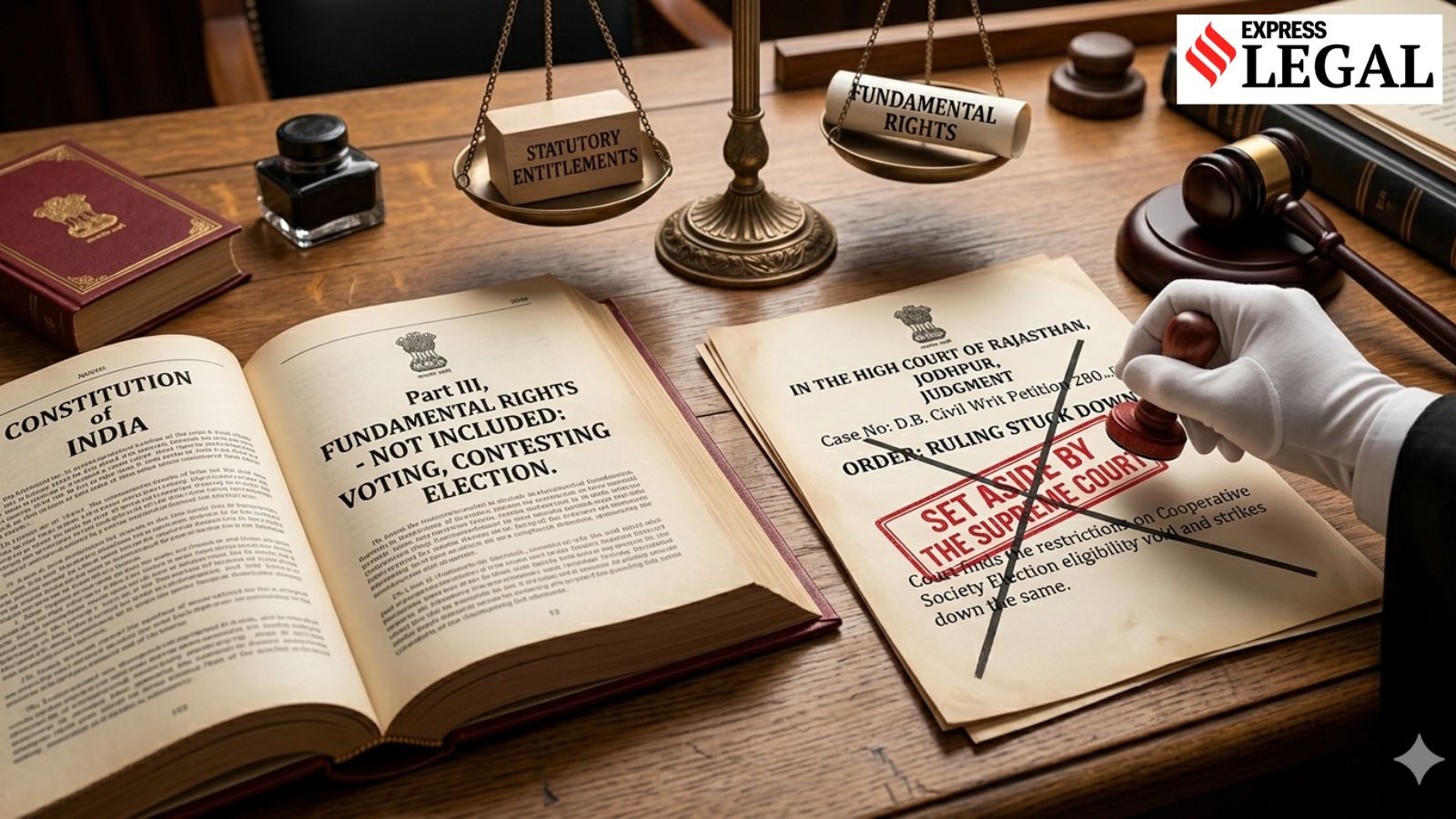
Supreme Court Clarifies Voting Rights as Statutory Entitlements in Rajasthan Case
The Indian Express • Apr 11, 2026

Supreme Court Allows Transgender Teacher Recruitment in Delhi
Hindustan Times • Apr 11, 2026

Supreme Court Requests Maharashtra's Response on Serial Killer Dhananjay Shinde's Bail Plea
Hindustan Times • Apr 11, 2026
Read the original article
Visit the source for the complete story.