

Supreme Court Reviews Sabarimala Temple Entry Case Amid Centre's Arguments on Religious Autonomy
Sabarimala Issue Linked To Deity’s Attribute, Can't Be Judicially Examined: Centre To SC
 News 18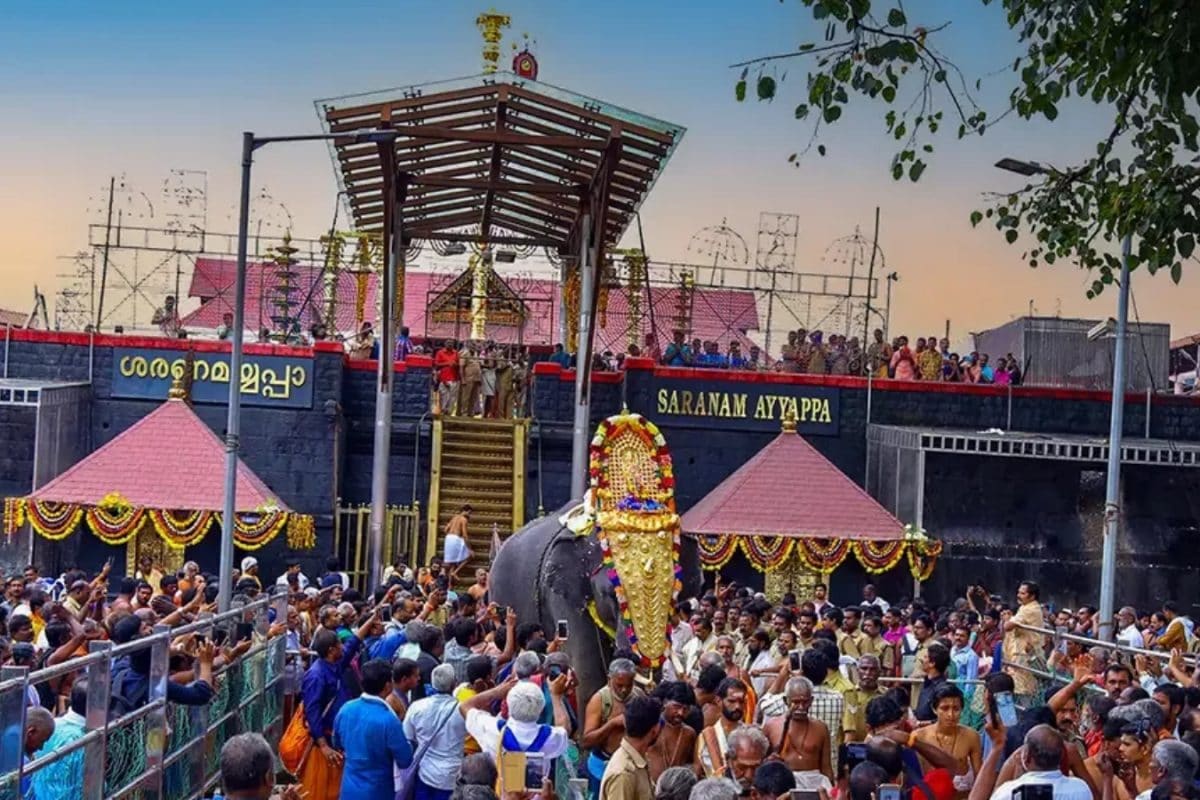
Image: News 18
The Supreme Court of India is reviewing petitions regarding entry restrictions at Sabarimala temple, with the Centre arguing that the issue pertains to the deity's attributes and should not be subject to judicial scrutiny. Solicitor General Tushar Mehta emphasized the need for respect towards religious practices and traditions during the hearing.
- 01The Supreme Court is hearing review petitions related to Sabarimala temple entry restrictions.
- 02The Centre argues that the issue relates to the deity's attributes and should not be judicially examined.
- 03Solicitor General Tushar Mehta emphasized respect for religious practices and traditions.
- 04The court is exploring the balance between constitutional rights and religious autonomy.
- 05The hearing includes discussions on Articles 25 and 26 concerning religious freedom.
Advertisement
In-Article Ad
The Supreme Court of India commenced hearings on Tuesday regarding long-pending review petitions concerning entry restrictions at the Sabarimala temple, dedicated to Lord Ayyappa. The Centre, represented by Solicitor General Tushar Mehta, firmly defended the religious character of the shrine, arguing that the matter is intrinsically linked to the attributes of the deity and should not be subject to judicial review. Mehta stressed that courts should exercise restraint in matters of faith, asserting that not all religious practices can be evaluated solely on individual rights. He highlighted that denominational traditions warrant respect and that the restrictions at Sabarimala, which apply to a specific age group, are unique to this temple. The nine-judge Constitution Bench, led by Chief Justice Surya Kant, is considering broader constitutional questions regarding religious freedom under Articles 25 and 26, as well as the extent of judicial intervention in religious customs. The hearing is set to continue as the court seeks to balance constitutional rights with religious autonomy.
Advertisement
In-Article Ad
The outcome of this case could significantly influence the rights of devotees and the interpretation of religious freedom in India.
Advertisement
In-Article Ad
Reader Poll
Should the Supreme Court have the authority to intervene in religious practices?
Connecting to poll...
Read the original article
Visit the source for the complete story.