



Exploring the Poetic Traditions of Medieval India: Tantra and Bhakti
Art and Culture with Devdutt Pattanaik | What Tantra and Bhakti poems tell us about medieval India
 The Indian Express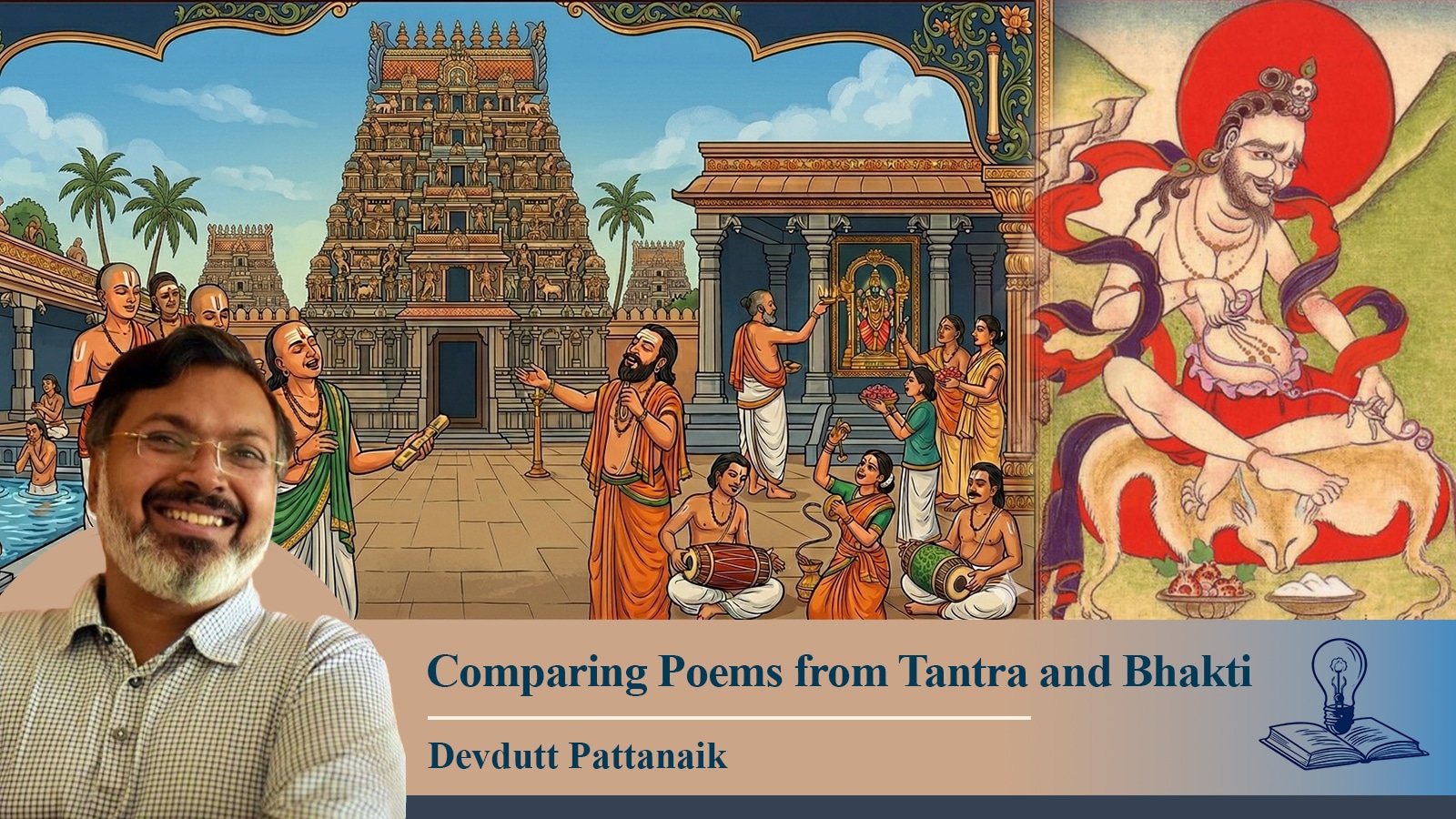
Image: The Indian Express
In medieval India, two distinct poetic traditions emerged: the Tantric Charyapada from eastern India and the Bhakti Alvar–Nayanar poetry from South India. While the Charyapada reflects a mystical and esoteric approach, the Bhakti poetry emphasizes public devotion and emotional intimacy with deities, showcasing the diverse religious expressions of the time.
- 01The Charyapada represents a mystical and esoteric poetic tradition from eastern India.
- 02Bhakti poetry emphasizes public devotion and emotional connections with deities.
- 03The Tamil bhakti poets used an established literary framework, while Charyapada poetry reflects linguistic transition.
- 04Imagery in Bhakti poetry is rooted in temple worship, contrasting with the village life depicted in Charyapada.
- 05Both traditions highlight the shift in India's religious imagination beyond Sanskrit.
Advertisement
In-Article Ad
During medieval times in India, two significant poetic traditions emerged: the Tantric Charyapada from eastern India and the Bhakti Alvar–Nayanar poetry from South India. The Charyapada, composed between the 8th and 12th centuries by Buddhist tantric teachers known as siddhas, consists of mystical songs that emphasize inner realization and the transformation of consciousness. In contrast, the Tamil bhakti poets, active from the 6th to 9th centuries, created hymns celebrating personal devotion to deities like Shiva and Vishnu, which were later compiled into works such as the Nalayira Divya Prabandham. The language of the Charyapada is less standardized and reflects a transitional phase between older and newer regional languages, while Tamil bhakti poetry showcases a mature Dravidian literary structure. The thematic focus also differs; Bhakti poetry is public and accessible, celebrating temple worship and emotional intimacy with God, whereas Charyapada poetry employs coded language and symbolism, reflecting its esoteric nature. Together, these traditions illustrate the diverse pathways of religious expression in early medieval India, moving beyond the confines of Sanskrit.
Advertisement
In-Article Ad
Advertisement
In-Article Ad
Reader Poll
Which poetic tradition do you find more impactful in understanding medieval Indian spirituality?
Connecting to poll...
Read the original article
Visit the source for the complete story.