


Yeast Cells Survive Mars-Like Conditions, Offering Hope for Life Beyond Earth
Life on Mars? Tiny cells just survived shock waves and toxic soil
 Science Daily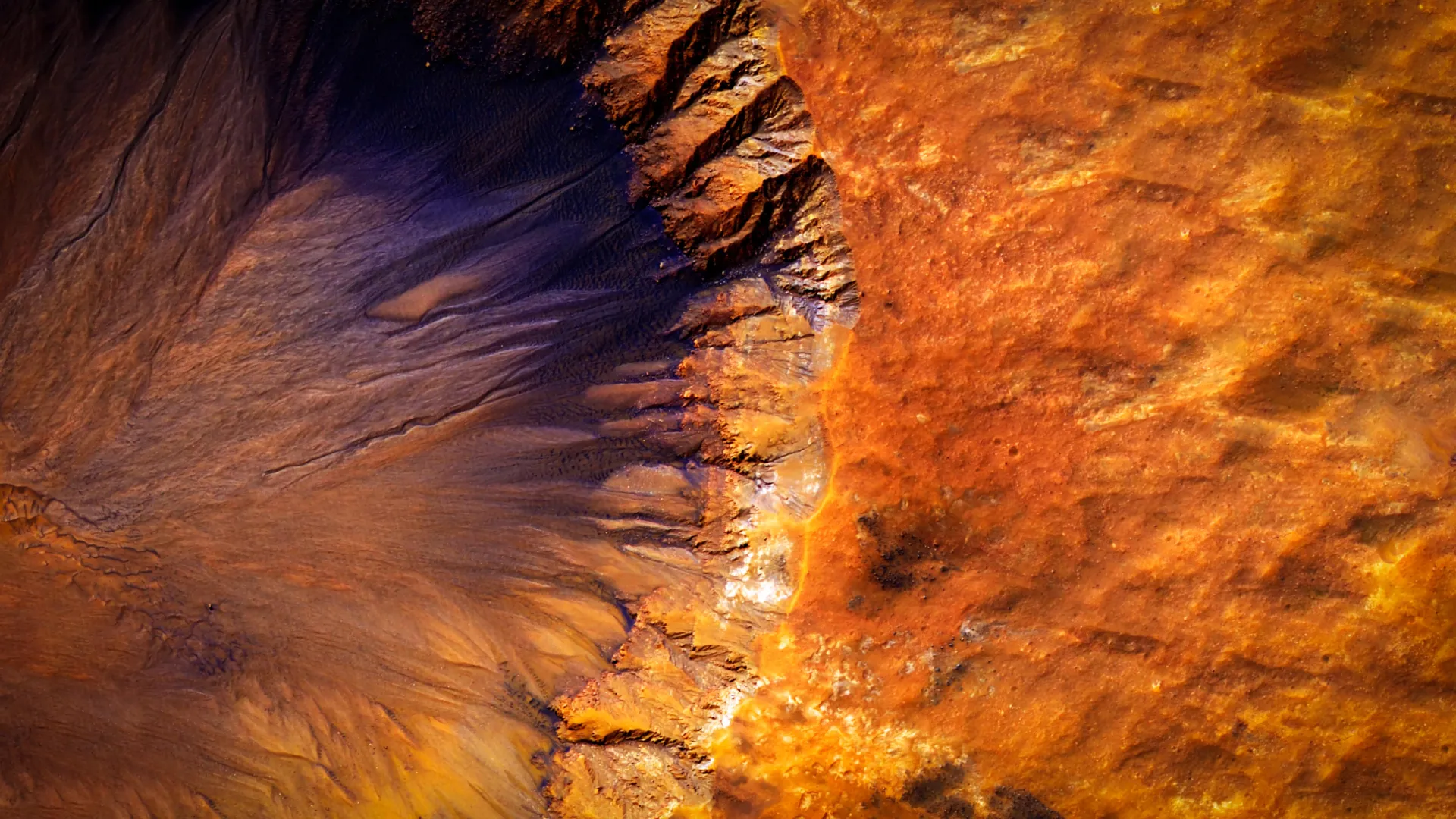
Image: Science Daily
In groundbreaking research, yeast cells (Saccharomyces cerevisiae) have demonstrated resilience against simulated Martian shock waves and toxic perchlorate salts. This study reveals that protective molecular structures, known as ribonucleoprotein condensates, play a crucial role in their survival, suggesting potential strategies for life beyond Earth.
- 01Yeast cells survived simulated Martian shock waves and toxic perchlorates.
- 02Ribonucleoprotein condensates are vital for cellular protection under stress.
- 03The research was conducted using a specialized device at the Physical Research Laboratory in Ahmedabad, India.
- 04Different stressors activate distinct cellular responses in yeast.
- 05Findings enhance understanding of potential life resilience on Mars.
Advertisement
In-Article Ad
A recent study has shown that yeast cells, specifically Saccharomyces cerevisiae, can survive conditions simulating the harsh environment of Mars, including shock waves from meteorite impacts and toxic perchlorate salts found in Martian soil. Conducted at the Physical Research Laboratory in Ahmedabad, India, researchers used a High-Intensity Shock Tube for Astrochemistry (HISTA) to generate shock waves at speeds of 5.6 times the speed of sound and exposed the yeast to 100 mM sodium perchlorate, mirroring concentrations found on Mars. Despite these extreme conditions, the yeast managed to survive, albeit with slowed growth, by activating protective responses involving ribonucleoprotein (RNP) condensates. These structures help stabilize genetic material and cellular functions under stress. The study indicates that different types of stressors can trigger unique cellular responses, emphasizing the resilience of simple life forms. The findings not only enhance the understanding of potential life on Mars but also highlight the significance of yeast as a model organism for studying survival mechanisms in extreme environments.
Advertisement
In-Article Ad
Advertisement
In-Article Ad
Reader Poll
Do you believe life could exist on Mars?
Connecting to poll...
Read the original article
Visit the source for the complete story.