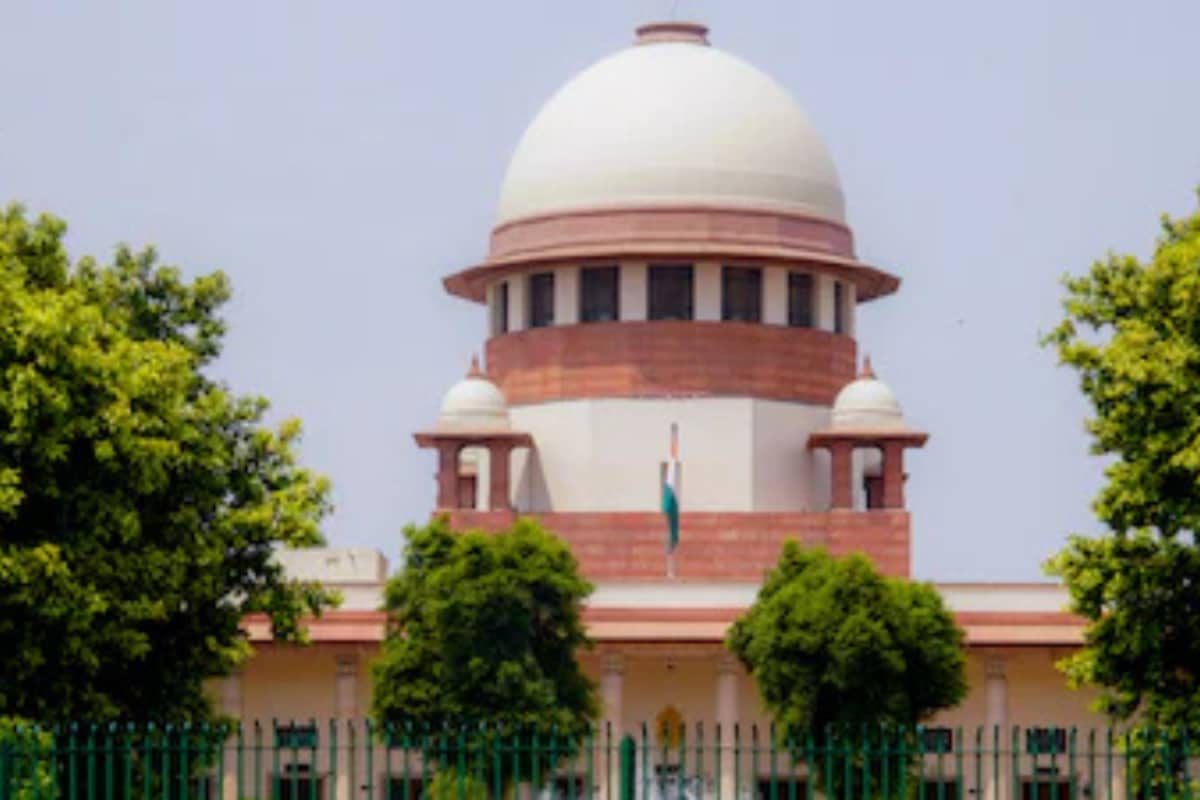
Opinion | Supreme Verdict: Why Abuse Of Scheduled Caste Benefits By Converts Must Be Curbed By clarifying that conversion ends SC eligibility and setting a three-part test for reconversion, the SC has drawn a clear line against misuse of constitutional safeguards. The categorical Supreme Court verdict pronounced by the bench of Justices PK Mishra and Manmohan in the Chinthada Anand v. State of Andhra Pradesh case has unequivocally clarified the constitutional position vis-à-vis Scheduled Caste converts to Christianity and Islam and their eligibility to avail of statutory benefits from the government. More importantly, this judgment lays down a litmus test of criteria to determine a person’s true religion, which, if implemented, can curb fraudulent practices. The current case stems from litigation filed by the appellant, Chinthada Anand, who claimed that he continued to belong to the Madiga community (a notified Scheduled Caste group) despite being a Christian pastor for more than 10 years; as a result, he sought punishment under the SC/ST Act for villagers who had hurled caste slurs against him. Recommended Stories - 'Kannada Abuse' Brawl Caught On Cam, Two Men Brutally Attacked By 8 Outside Dombivli Bar | VIDEO - Kiratpur-Manali Highway Faces Disruption Amid Punjab-Himachal Toll Tax Dispute - Punjab govt announces key industrial reforms, eases leasehold conversion norms - Dependent on supply from southern states, Maharashtra plans to develop egg brand Quoting the Constitution, the judges concluded: “No person who professes a religion other than Hindu, Sikh or Buddhist shall be deemed to be a member of a Scheduled Caste. This bar under Clause 3 of the Constitution (Scheduled Castes) Order, 1950 is categorical and absolute. Conversion to any religion not specified in Clause 3 results in immediate and complete loss of Scheduled Caste status from the moment of conversion, regardless of birth." Hence, Chinthada Anand was not eligible for protection under the SC/ST Act. The Scheduled Castes and the Scheduled Tribes (Prevention of Atrocities) Act, 1989 was enacted by Parliament to combat atrocities and hate crimes directed at Scheduled Castes and Scheduled Tribes. What was the basis that prompted the Constitution (Scheduled Castes) Order, 1950? Although Hindu scriptures do not endorse caste discrimination, Hindu society had become distorted by unhealthy practices, resulting in discrimination against the so-called lower castes. Therefore, when in 1947 a predominantly Hindu government took charge (after centuries of Muslim and British rule), it was decided to rectify this deficiency, which was considered exclusive to Hindu society, by conferring certain benefits on individuals belonging to specific disadvantaged groups within Hindu society, called Scheduled Castes and Tribes. Hence, the Presidential Order of 1950. Sikhism and Buddhism, being Indic religions, were also affected by caste and were subsequently included under this provision. Proselytising religions like Christianity and Islam boast of equality among all their adherents and have exploited caste inequality in Hinduism to lure vulnerable sections of Hindu society, such as lower castes, into their fold. Caste inequality is a key factor driving conversion from Hinduism to Christianity. Other marginalised groups like Adivasis have also been encouraged to forsake their traditional beliefs. As per a Pew Research report, nearly three-fourths (74 per cent) of Indian Christians identify themselves as originally belonging to lower castes, with 57 per cent claiming an SC/ST background. Lower castes and Adivasis also happen to be economically disadvantaged, making them easy prey for Christian missionaries and organisations flush with money from the West. There is a widespread impression, true for most intents and purposes, that access to healthcare, education, and monetary benefits plays a large role in these conversions. Recently, during Karnataka’s Social and Educational Survey, commonly referred to as the caste census, Bengaluru Archbishop Peter Machado sermonised: “Christianity teaches that all are equal before God. Caste distinctions are not part of our faith." But that did not stop him from instructing his flock to indicate their caste and sub-caste in the survey in an attempt to garner privileges. These remarks by the archbishop represent an astounding degree of duplicity. In one breath, you claim that Christianity has no caste distinctions, and in the very next, you encourage Christians to document their original caste so that they can benefit from caste-based affirmative action that is exclusive to Hinduism and other Indic religions. Abuse of constitutional benefits is so widely prevalent in Andhra Pradesh that it has given rise to a new term—Crypto-Christians. Crypto-Christians are individuals, often from Dalit communities, who adopt Christianity in practice but retain Hindu identification (caste certificates) in state records to preserve access to caste-based reservations and other government benefits. This widespread abuse, sustained by an organised network, prompted the Andhra Pradesh Social Welfare Department to issue an order in 1998 to investigate the misuse of SC certificates among Dalit Christians. The order called for ‘local spot enquiry’ by officials to determine the religion practised by the applicant for the SC certificate. Officers were expected to visit the residence of the person in question, study the religion practised at home, and make enquiries in the locality to ascertain the validity of an application. Christian groups have been lobbying against this order. Despite the 1998 order, the abuse continues. In September 2020, the Legal Rights Protection Forum (LRPF), a watchdog NGO working for the rights of Scheduled Castes, found that 70 per cent of 29,841 Christian pastors who received one-time assistance of Rs 5,000 from the Andhra Pradesh government through the Disaster Relief Fund were holding Hindu SC/OBC caste certificates. Subsequently, LRPF submitted a petition to the National SC Commission demanding action against the large-scale misuse of SC status by converted Christians. The Crypto-Christian practice is also gaining a foothold in Punjab, where independent ministries led by self-appointed pastors are indulging in the spread of superstition and illegitimate conversions; here again, new converts are advised to maintain their original identities on paper. Tejasvi Minhas, the chief of Punjab Bachao Morcha (PBM), which is opposing illegal conversions, called this SC verdict a “much-needed direction" but was sceptical about its practical implementation. In Maharashtra too, this practice is common, especially in the districts of Nandurbar, Sangli and Ahmednagar. Last year, Maharashtra Chief Minister Devendra Fadnavis told the Legislative Council that the government would take legal action against ‘Crypto-Christians’ who are fraudulently availing of educational, employment and electoral benefits reserved for Scheduled Castes. The current verdict also states that mere possession of an SC certificate does not make one eligible for statutory benefits, nor can state orders supersede the constitutional directive. More importantly, the verdict lays down a test to confirm one’s identity as a Scheduled Caste. The verdict stated that in cases where a person claims to have reconverted from a religion not specified in Clause 3 of the Constitution (Scheduled Castes) Order, 1950 back to the Hindu, Sikh or Buddhist religion, the following three conditions must be cumulatively and conclusively established: - There must be clear proof that the person originally belonged to a caste notified under the Constitution (Scheduled Castes) Order, 1950. - There must be credible and unimpeachable evidence of bona fide reconversion to the original religion, accompanied by complete and unequivocal renunciation of the religion to which conversion had taken place, total dissociation therefrom, and actual adoption and observance of the customs, usages, practices, rituals, and religious obligations of the original caste. - There must be satisfactory and credible evidence establishing acceptance and assimilation by members of the original caste and the concerned community. Mere self-proclamation is insufficient; the community must recognise and accept the person as one of their own. All the above three conditions are mandatory and cumulative. This verdict also opens the door for SC individuals to return to their original religion if they wish to legally avail of constitutionally sanctioned privileges. After all, in many instances, conversion of Hindus to Christianity does not strictly qualify as an expression of true religious freedom in the theological sense. Conversions are often a combination of exploitation of discontent and monetary inducement. So much so that a significant proportion of converted Christians continue to believe in karma (54 per cent) and reincarnation (29 per cent)—core principles of Hinduism—suggesting that these converts have not altered their beliefs (Pew Research report). Crypto-Christian practices are not only morally untenable but also a fraud on the Constitution; they infringe on the rights of deserving Scheduled Castes who have remained Hindu by eating into their reservations in education and jobs and siphoning away money earmarked for them. Armed with this verdict, state governments—especially in Andhra Pradesh, Punjab and Maharashtra—must take stringent measures to curb this illegal practice. The writer is a US-based author. Views expressed in the above piece are personal and solely that of the author. They do not necessarily reflect News18’s views.


 News 18