

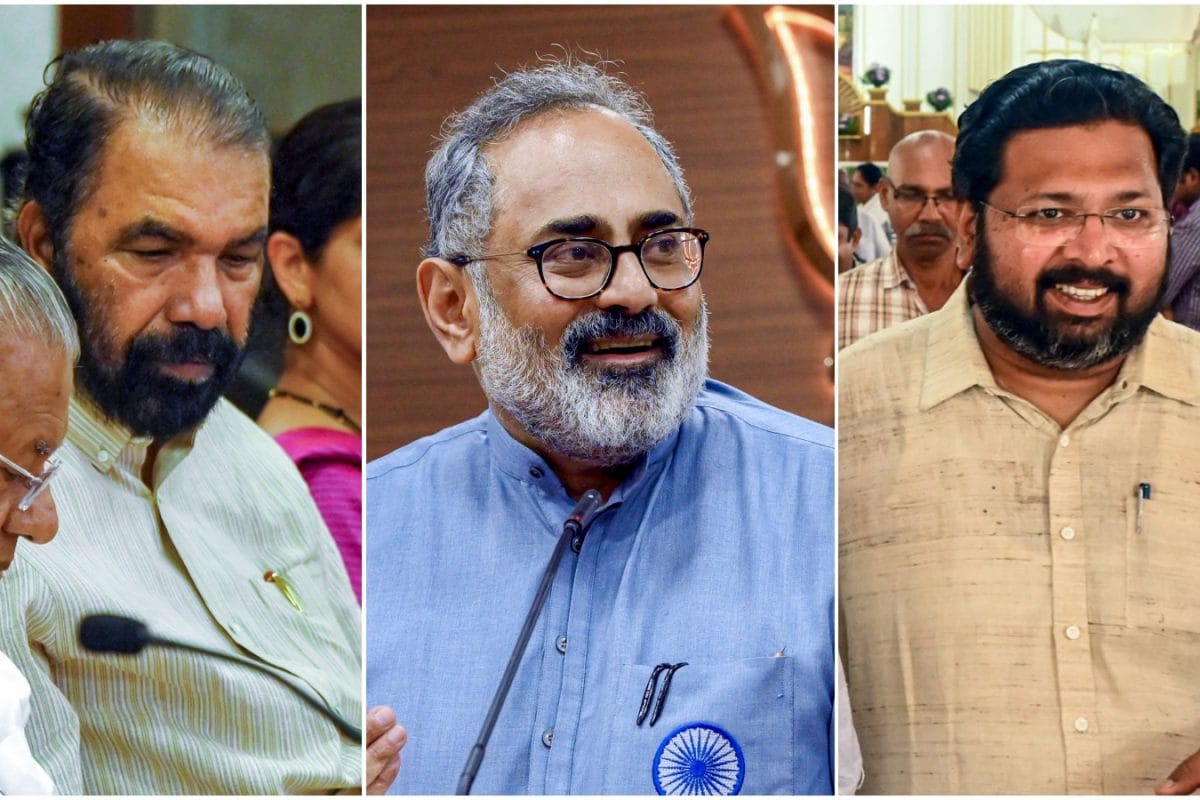


Indian Government Defends Sabarimala Temple Restrictions, Claims Unique Respect for Women
'Only Society That Worships Women': Centre Says India Not Patriarchal As Per West In Sabarimala Hearing
 News 18
Image: News 18
The Indian government argued before the Supreme Court that Indian society uniquely reveres women, countering Western notions of patriarchy. While defending restrictions on women's entry to the Sabarimala temple in Kerala, the government stated that religious practices should remain beyond judicial review, challenging the 2018 ruling that lifted the ban.
- 01The Indian government claims that Indian society uniquely reveres women, opposing Western views of patriarchy.
- 02Restrictions on women's entry to Sabarimala temple are defended as a matter of religious faith, beyond judicial scrutiny.
- 03The government criticized the 2018 Supreme Court ruling that allowed women of menstruating age to enter the temple.
- 04The solicitor general emphasized that the judiciary lacks the expertise to interpret sacred texts and should not impose secular standards on religious practices.
- 05The argument suggests that gender equality should not be conflated with religious freedom under Article 25 of the Constitution.
Advertisement
In-Article Ad
During a Supreme Court hearing on the Sabarimala temple restrictions, the Indian government, represented by solicitor general Tushar Mehta, asserted that Indian society is distinct in its reverence for women, contrasting it with Western perceptions of patriarchy. The government maintained that the restrictions on women's entry into the temple should be upheld as matters of religious faith that are immune from judicial review. Mehta criticized the 2018 Supreme Court decision that lifted the ban on women of menstruating age, calling it 'wrongly decided'. He argued that the judiciary should not test religious practices against secular standards, as this would constitute an overreach. The solicitor general also contended that the concept of 'constitutional morality' used in the previous ruling is vague and not grounded in the Constitution's text. He emphasized that the intent of the Constitution's religious freedom clauses is rooted in secularism rather than gender equality, suggesting that gender issues are adequately addressed through other constitutional articles.
Advertisement
In-Article Ad
The Supreme Court's decision on this case could significantly affect women's access to religious sites in India, influencing broader discussions on gender equality and religious freedom.
Advertisement
In-Article Ad
Reader Poll
Do you believe the Supreme Court should allow women entry into the Sabarimala temple?
Connecting to poll...
More about Supreme Court of India
Indian Government Challenges 2018 Supreme Court Ruling on Adultery Decriminalization
News 18 • Apr 7, 2026
Supreme Court Affirms Voluntary Retirement as Employee Right
The Economic Times • Apr 7, 2026

Indian Government Defends Restrictions on Women's Entry to Sabarimala Temple in Supreme Court
News 18 • Apr 7, 2026
Read the original article
Visit the source for the complete story.