



NDA Faces Legislative Challenge on Women's Reservation Bill Ahead of 2029 Elections
Women's Reservation & Delimitation: Does NDA Have Mathematical Muscle To Push Plan Through Parliament?
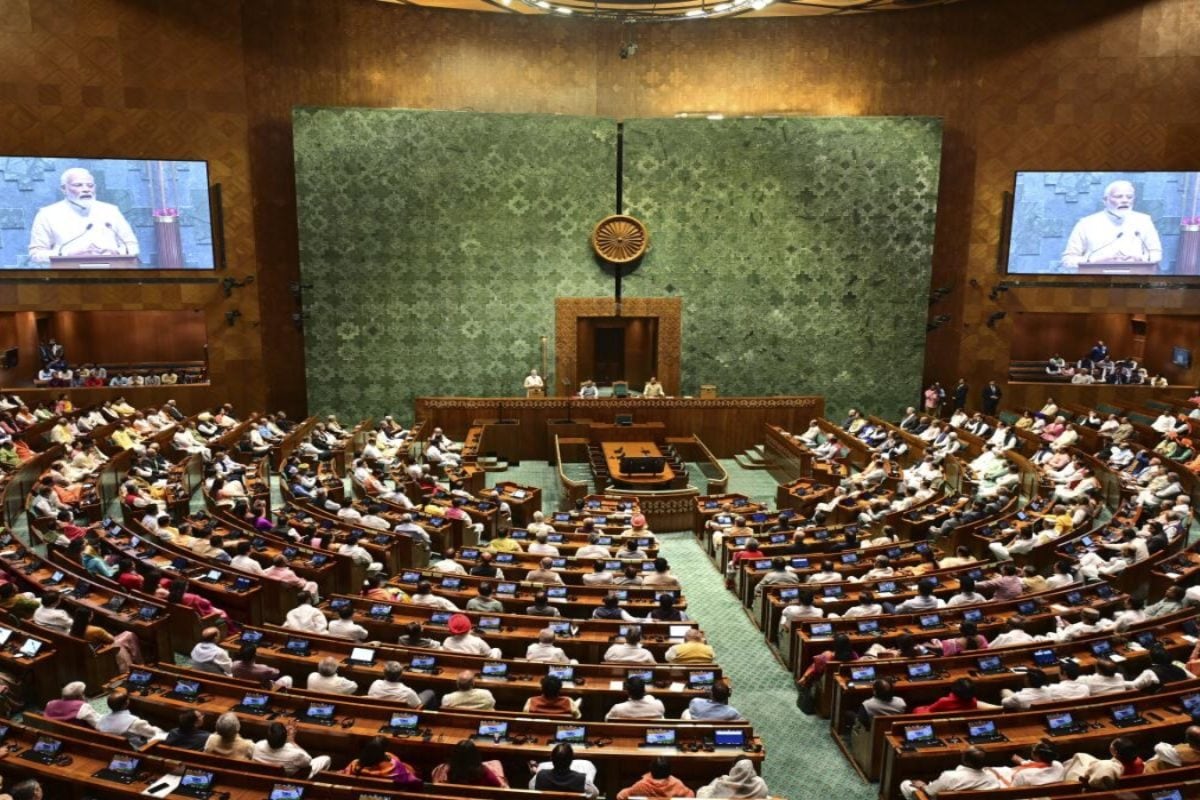
Image: news18
The National Democratic Alliance (NDA) is pushing a dual-bill strategy to implement the Nari Shakti Vandan Adhiniyam, which mandates a 33% women's reservation in parliament. As the April 2026 Budget Session approaches, the NDA must secure additional votes to achieve the necessary two-thirds majority for constitutional amendments in both the Lok Sabha and Rajya Sabha.
- 01The Nari Shakti Vandan Adhiniyam aims for a 33% women's reservation in parliament.
- 02The NDA needs around 362 votes in the Lok Sabha for a constitutional amendment.
- 03In the Rajya Sabha, the NDA currently holds about 141 seats, needing 164 for a two-thirds majority.
- 04The proposed increase of Lok Sabha seats from 543 to 816 is controversial, particularly regarding regional representation.
- 05The government is courting non-aligned parties to secure the necessary votes by April 18.
Advertisement
In-Article Ad
The Nari Shakti Vandan Adhiniyam, passed in September 2023, seeks to implement a 33% women's reservation in India's parliament. As the April 2026 Budget Session unfolds, the National Democratic Alliance (NDA) is pursuing a dual-bill strategy: a constitutional amendment to decouple the quota from a new Census and a proposal to increase the Lok Sabha's seats from 543 to 816. Currently, the NDA commands approximately 293 to 294 seats in the Lok Sabha, needing around 362 votes to pass the amendment, which requires a special majority. In the Rajya Sabha, the NDA's strength has risen to about 141 seats, falling short of the 164 votes needed for a two-thirds majority. The government is actively engaging with non-aligned parties like the YSRCP, BRS, and BJD to gain support, although concerns about regional representation and the demand for an OBC sub-quota persist. The three-day special session from April 16-18 is critical for the NDA to secure the necessary votes, as failure to do so could delay the implementation of the women's reservation until after the 2029 general elections.
Advertisement
In-Article Ad
The proposed women's reservation could significantly alter the political landscape, enhancing female representation in governance and impacting party dynamics.
Advertisement
In-Article Ad
Reader Poll
Do you support the proposed women's reservation in parliament?
Connecting to poll...
More about National Democratic Alliance
Read the original article
Visit the source for the complete story.