



Ethical Challenges in the AI Era: A Reflection for UPSC Aspirants
Ethics Simplified: UPSC aspirants ask — Are humans failing ethically in the AI age? Here’s an answer
 The Indian Express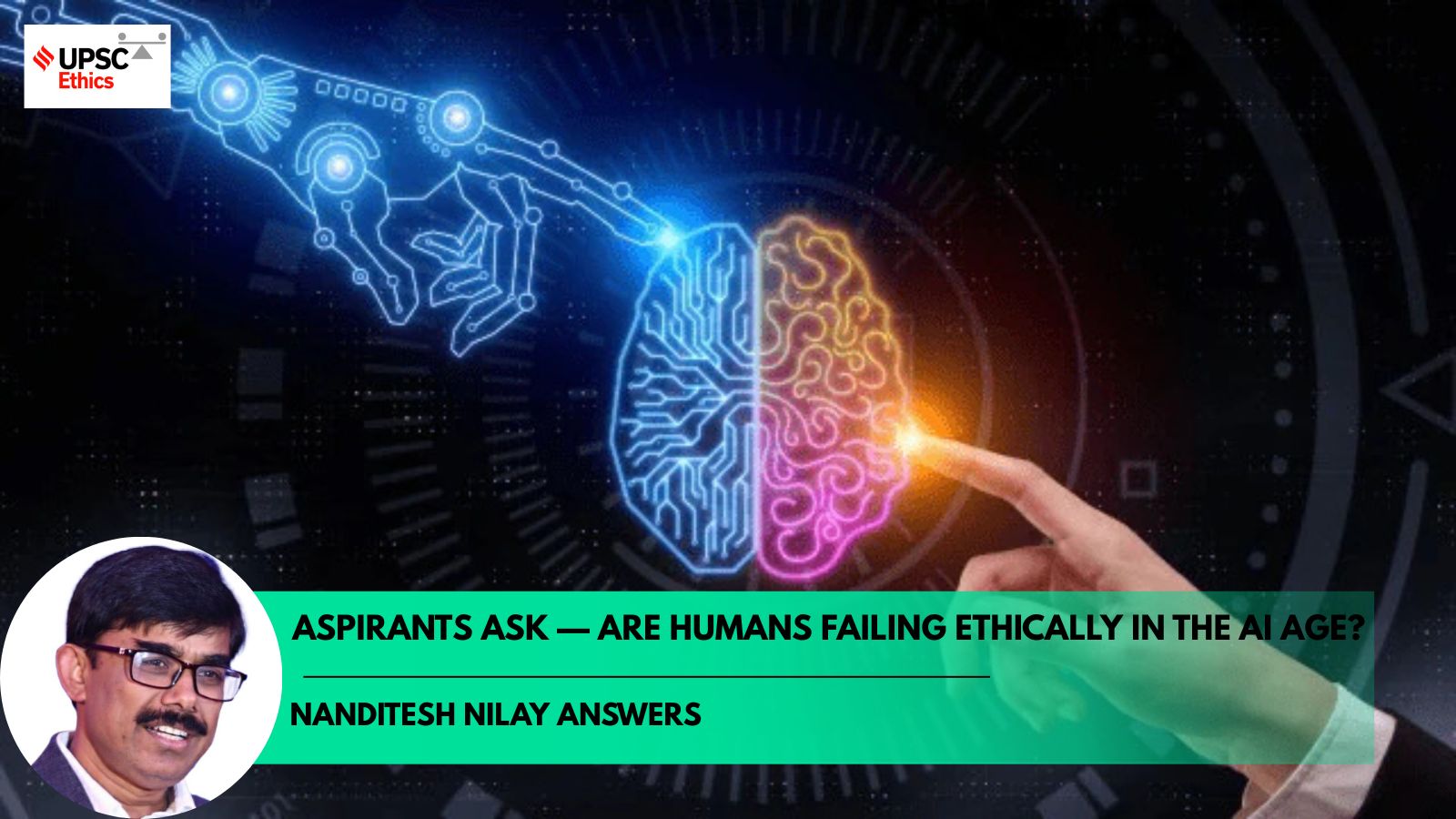
Image: The Indian Express
As artificial intelligence (AI) becomes more integrated into society, ethical dilemmas arise regarding human behavior and decision-making. This article explores the disconnect between education and ethics, the limitations of AI in moral judgment, and the importance of integrity in both individuals and institutions, urging UPSC aspirants to reflect on these pressing issues.
- 01The rise of AI presents new ethical dilemmas, highlighting the limitations of human moral judgment.
- 02Education does not automatically equate to ethical behavior; a gap exists between knowledge and values.
- 03AI systems can reflect human biases, raising concerns about fairness and accountability.
- 04Ethical leadership and citizen engagement are crucial for upholding integrity in governance.
- 05Addressing ethical challenges requires a multi-faceted approach, including value-based education and ethical AI development.
Advertisement
In-Article Ad
The increasing integration of artificial intelligence (AI) into society raises significant ethical questions about human behavior and decision-making. As UPSC aspirants ponder the implications of AI, they must confront the disconnect between education and ethical behavior. Despite being educated, many individuals fail to uphold ethical standards, revealing a gap between knowledge and values. Philosophers like Aristotle and Immanuel Kant emphasize that ethics should be cultivated through practice and guided by duty, yet many prioritize self-interest. AI, while powerful, lacks conscience and operates based on the biases of its creators, leading to ethical concerns such as algorithmic bias and lack of transparency. The ethical crisis extends beyond individual actions to institutions and governance, where accountability must align with core democratic values. To address these challenges, a multi-dimensional approach is needed, focusing on institutional transparency, value-based education, ethical AI development, and promoting ethical leadership. Ultimately, the future of ethics will depend on human character and integrity, not just on technological advancements.
Advertisement
In-Article Ad
The ethical challenges posed by AI and human behavior affect governance, public trust, and societal values, making it crucial for citizens to engage in ethical discussions and practices.
Advertisement
In-Article Ad
Reader Poll
How important is it to integrate ethics into AI development?
Connecting to poll...
Read the original article
Visit the source for the complete story.