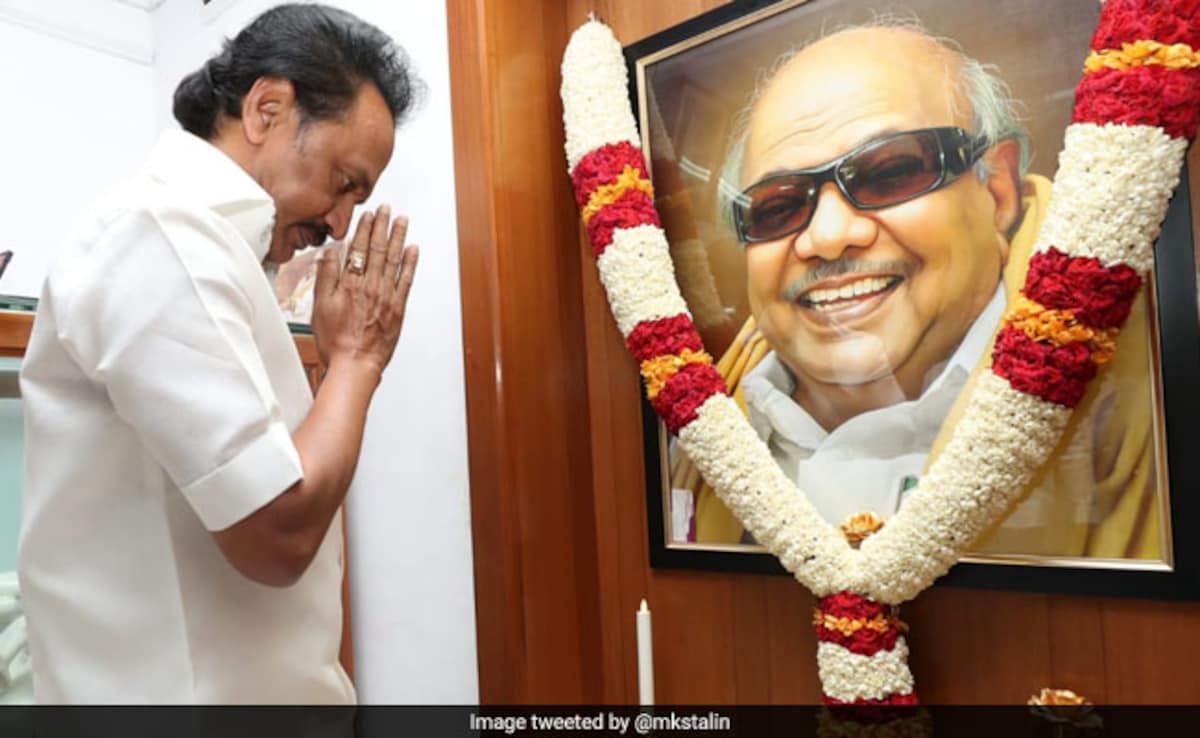
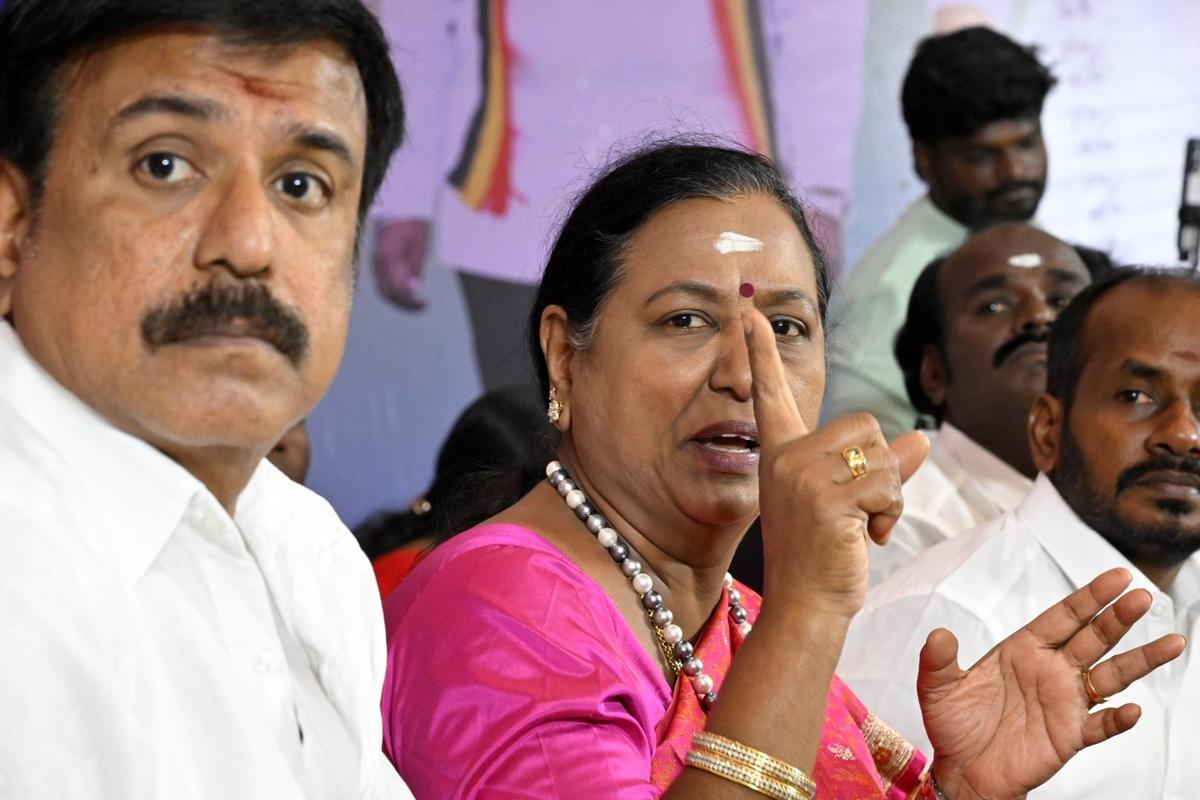
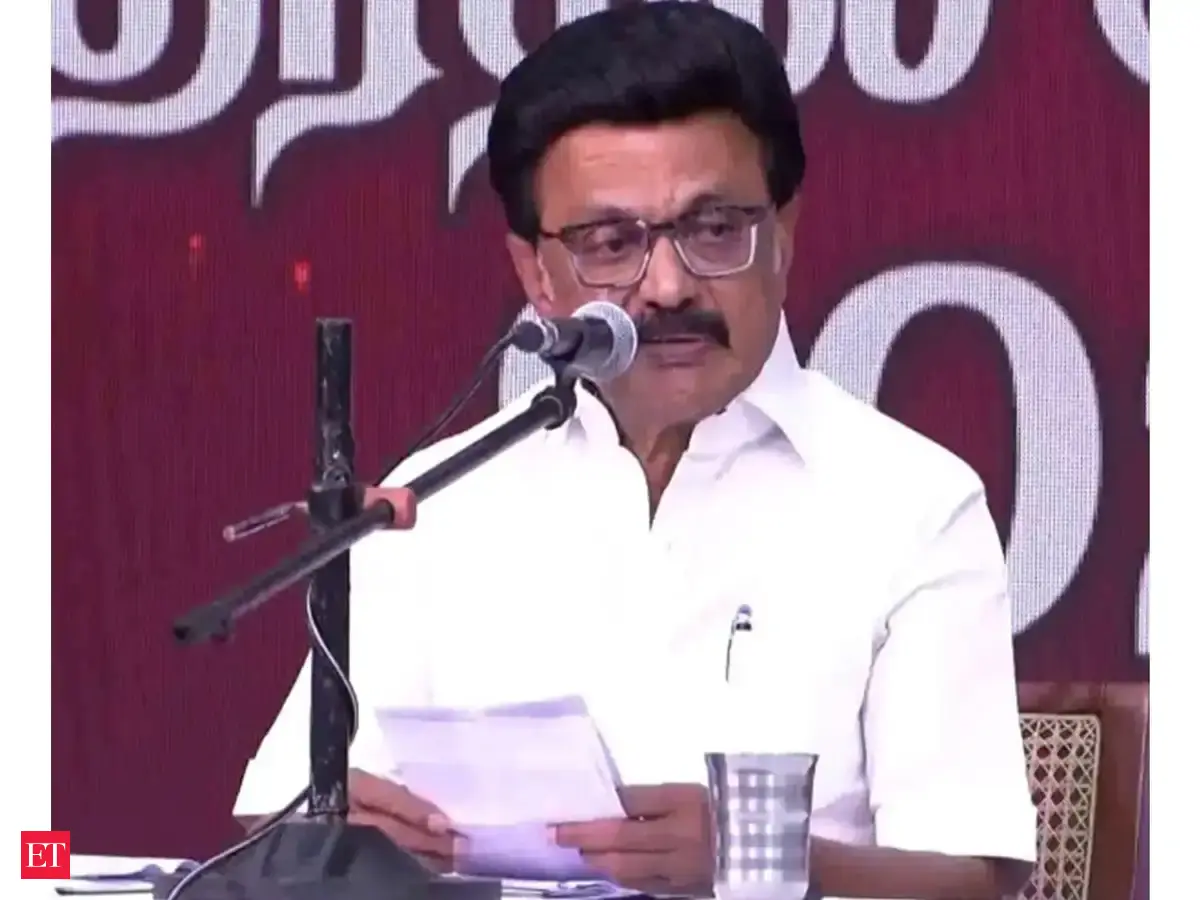
Muthuvel Karunanidhi is back. Seven and a half years after he passed away, the former chief minister is now the subject of heated barbs between his son MK Stalin and his political rival, AIADMK supremo Edappadi Palaniswami. None of the arguments are pleasant as politics is being done over someone who is no more.The AIADMK has brought back Jayalalithaa's old reference to Karunanidhi having reportedly arrived in Chennai (then Madras) by travelling ticketless on the train. This has been part of Dravidian folklore but how it is being interpreted differently by the two sides is what makes the anecdote interesting. While the AIADMK's aim has always been to say that Karunanidhi's innings in the state capital began with "'cheating the railways", the DMK used it to paint Karunanidhi as a self-made man who came from nothing. Over the years, the narrative helped them frame the DMK as a party that understands the struggle of the common man. But now when Palaniswami refers to Karunanidhi's ticketless travel again in 2026, it is to highlight it as an example of DMK dishonesty.The more emotional war of words is over what happened in the last few years of Karunanidhi and the controversy over his final resting place. Palaniswami quoted Karunanidhi's elder son MK Alagiri who had told a newspaper soon after he was expelled from the DMK in 2014 that his father was ''being held a prisoner''. Palaniswami went on to promise that if the AIADMK came to power, he would order a state-led probe into allegations that Karunanidhi was held as a ''prisoner'' or under ''house arrest'' during his last few days.The DMK hit back accusing EPS of breaking tradition by talking of a late leader and making personal comments only to grab attention. Stalin spoke about how when he personally requested the then chief minister Palaniswami to honour Karunanidhi's last wish to be buried by the side of his political mentor CN Annaduri at the Marina beach, the plea was turned down. At that time, an intervention by the Madras High court had overturned the government's decision.Palaniswami called it a case of his government going by the precedent set by Karunanidhi. When MGR's widow Janaki Ramachandran, who had been CM for 24 days in January 1988, passed away in 1996, Karunanidhi according to EPS, ruled that only a serving CM could be allotted land for burial at the Marina. Palaniswami's defence was that by the same logic, Karunanidhi was not CM when he died. The DMK has always held it against EPS, calling him vindictive and cruel.But what really is the purpose of raking up old stories in 2026? Knowing how seasoned political players Stalin and Palaniswami are, it would be a mistake to dismiss the heated exchange as mere election rhetoric. It is in fact, a clever move to reframe the narrative of the 2026 election in the DMK vs AIADMK colours, one that Tamil Nadu has been used to for decades.It goes without doubt that these flashback stories galvanise the DMK and AIADMK cadre. The sight of an emotional Stalin recounting going to Palaniswami to plead for land for his father's last rites is what the DMK hopes will push its cadre to give it all on the ground in the run-up to April 23. Likewise, the anti-Karunanidhi rhetoric is what invigorates the AIADMK rank and file, given that opposition to the late DMK leader is what the party was founded on.For the AIADMK, it however, goes beyond targeting the DMK first family. When you travel around the state and listen to voices of voters under 40, there is a perceptible shift in the traditional AIADMK voter, particularly women, towards the newly formed Tamilaga Vettri Kazhagam (TVK) of actor-turned-politician, Vijay. So legacy warfare has become a tool to co-opt the young voters by telling stories of the past. The reference to the Janaki Ramachandran episode is to connect at an emotional level to the admirers of MGR and bring those voters back to the AIADMK. By bringing up tales of alleged ticketless travel or the family feuds, the opposition AIADMK is also trying to de-deify Karunanidhi for a Gen-Z audience that did not live through the times when he was chief minister.The grudge stories going back to Karunanidhi, MGR and Jayalalithaa also serve as emotional anchors and ensure that the 50-plus older electorate, which has always chosen between the party of the rising sun and the party of the two leaves, does not get swayed by the youngsters who are rooting for ''Maatrum'' (change) aka Vijay's TVK. The tales reinforce loyalty that has fed off deep-rooted acrimony between the leadership of the two Dravidian majors.Will it impact the gen-Z first-time voter? Unlikely because for this group, higher education opportunities and job placements are more pressing issues. Not every young voter wishes to remain rooted in the past and many would even take a chance with an untested commodity. In this election in Tamil Nadu, it is no longer a case of the elders in the family deciding who the entire family votes for.Incidentally, the name calling is not restricted to the two Dravidian parties and that is another reason why the youth do not connect to the flashback tales. All supporters of the TVK are, with disdain, referred to as ''Tharkuris'' by the supporters of the DMK and AIADMK. In Tamil slang, it means a nincompoop, an idiot, an uneducated person, or in the context of TVK, a blind follower. It is an elitist and privileged slur to attack the intellectual competence of Vijay's followers. April 23 will reveal how much of this mudslinging makes an impact on the mind of the voter.(The author is a senior journalist)Disclaimer: These are the personal opinions of the author

 Ndtv
Ndtv