
Scientists Discover Key Microbial Clue to the Evolution of Complex Life on Earth
‘First contact’ that may have led to complex life on Earth finally witnessed by scientists
 The Conversation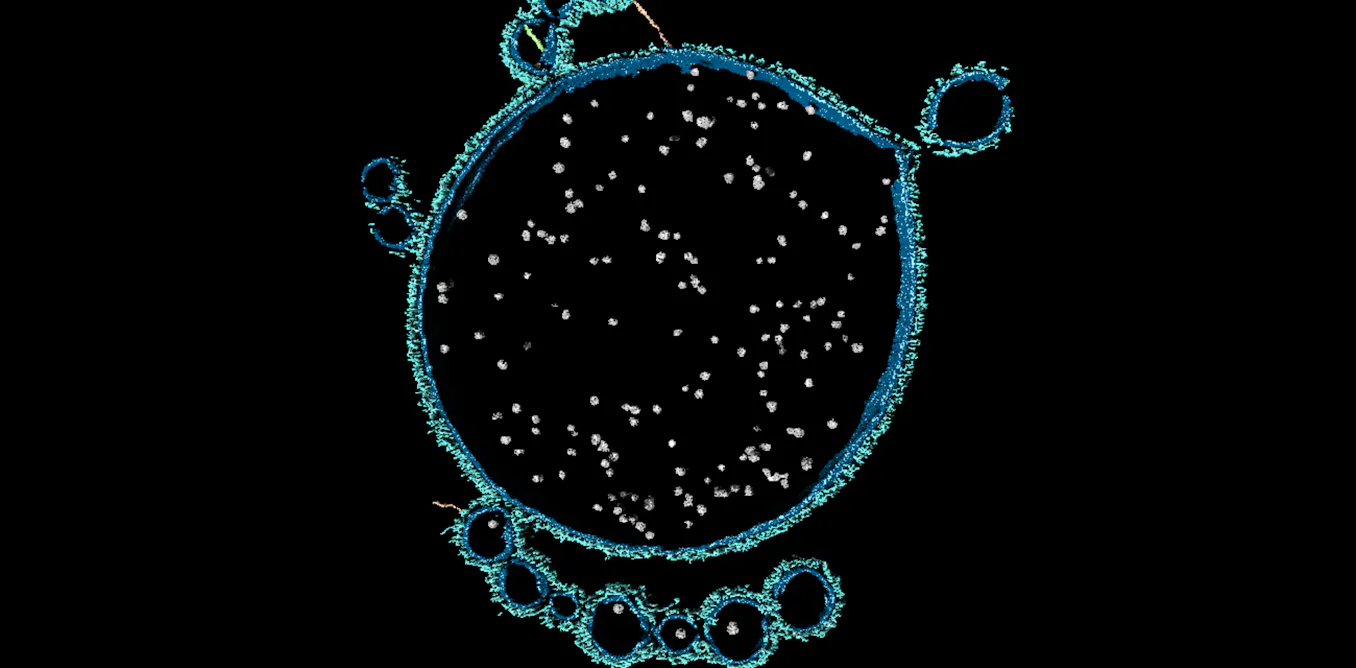
Image: The Conversation
Researchers have discovered a new Asgard archaeon, _Nerearchaeum marumarumayae_, in Shark Bay, Western Australia, providing insight into the origins of complex life. This finding reveals how ancient microbes may have cooperated to form eukaryotes, the building blocks of plants and animals, linking modern science with Indigenous knowledge.
- 01Discovery of _Nerearchaeum marumarumayae_ offers clues about the evolution of complex life.
- 02Asgard archaea may be the closest relatives of eukaryotes, crucial for the development of plants and animals.
- 03The study highlights cooperation between ancient microbes as a potential model for early life.
- 04Research integrates Indigenous knowledge, naming the new archaeon in the Malgana language.
- 05Gathaagudu, a World Heritage Site, faces threats from climate change and human activity.
Advertisement
In-Article Ad
In a groundbreaking study published in *Current Biology*, scientists have identified a new Asgard archaeon, _Nerearchaeum marumarumayae_, derived from microbial mats in Shark Bay, Western Australia. This discovery sheds light on the evolutionary transition to complex life, suggesting that the cooperation between Asgard archaea and bacteria may have led to the formation of eukaryotes, the cells that compose all plants and animals. The researchers utilized advanced techniques, including DNA sequencing and electron cryotomography, to observe the direct interactions between these ancient microbes, revealing nutrient-sharing behaviors that hint at their collaborative nature.
Moreover, the study acknowledges the cultural significance of Gathaagudu, where Aboriginal peoples have lived for over 30,000 years. The name of the new archaeon reflects the Malgana language, emphasizing the connection between Indigenous knowledge and scientific discovery. However, Gathaagudu is threatened by climate change and human activities, highlighting the need for conservation efforts. This research not only provides a glimpse into our evolutionary past but also bridges the gap between modern science and ancient cultures.
Advertisement
In-Article Ad
The findings could influence conservation efforts in Gathaagudu, emphasizing the importance of preserving both the unique ecosystem and its cultural heritage.
Advertisement
In-Article Ad
Reader Poll
How important is it to integrate Indigenous knowledge in scientific research?
Connecting to poll...
Read the original article
Visit the source for the complete story.