




Guide to Self-Enumeration for India's Census 2027: Steps and Schedule
Census 2027 self-enumeration: How to fill your details online from home? Here's a step-by-step guide and state-wise schedule
 The Economic Times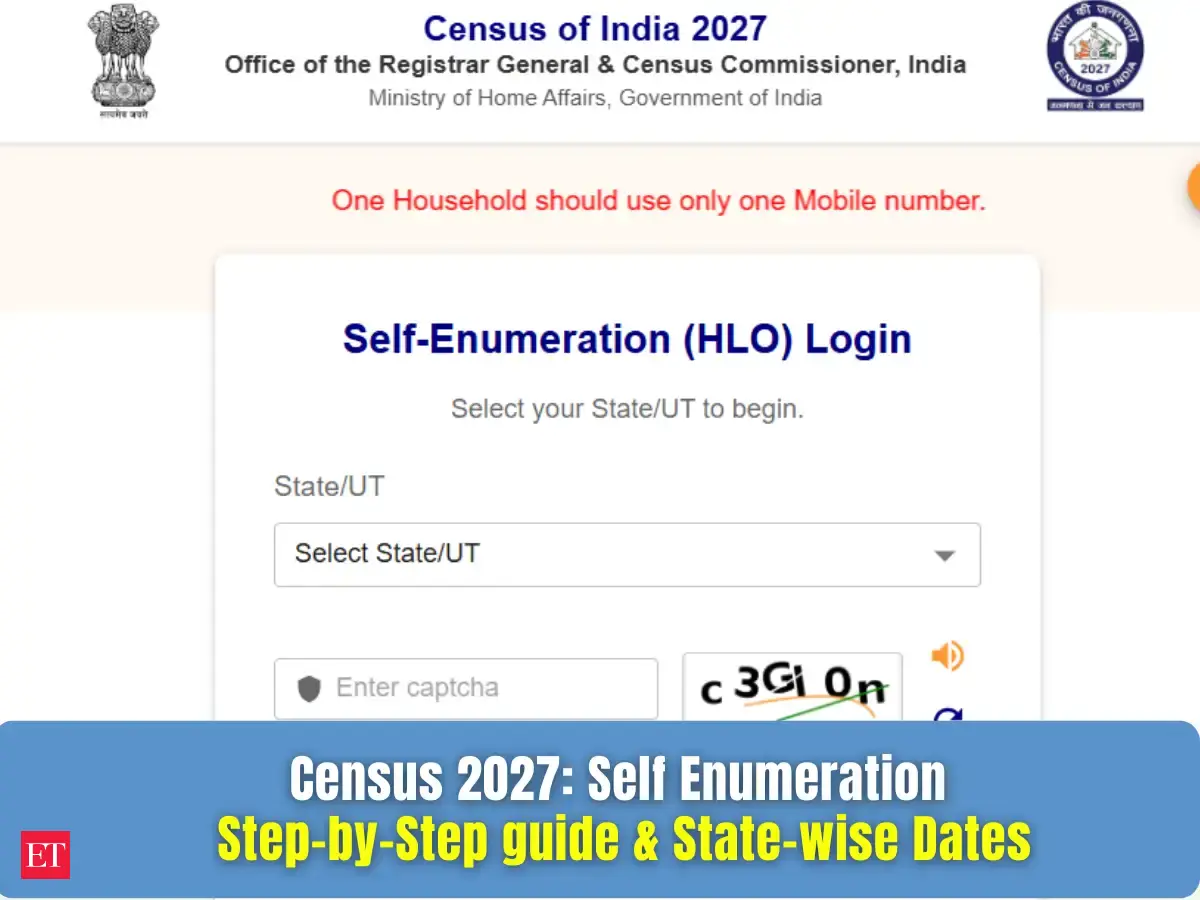
Image: The Economic Times
India's Census 2027 introduces self-enumeration, allowing citizens to fill out their details online starting April 2026. Conducted in two phases, the census aims to improve accuracy and efficiency. Phase I focuses on housing details, while Phase II will gather individual information in February 2027.
- 01Census 2027 will utilize self-enumeration, enabling online data entry for households.
- 02The census is conducted in two phases: Phase I for housing details and Phase II for individual data.
- 03Self-enumeration opens on a state-wise basis from April 2026.
- 04Participation in the census is mandatory, but self-enumeration is encouraged for its convenience.
- 05The official self-enumeration portal ensures data security and privacy.
Advertisement
In-Article Ad
India's Census 2027 will be the first fully digital census, introducing self-enumeration that allows citizens to provide household details online. This initiative, starting in April 2026, aims to enhance the accuracy of data collection and streamline the process. The census is divided into two phases: Phase I, from April to September 2026, will gather housing-related information, while Phase II, scheduled for February 2027, will collect individual details such as age, sex, and education. The self-enumeration process is optional but highly recommended, as it offers privacy and saves time for both citizens and officials. The official self-enumeration portal will be accessible only within India and requires an internet connection, ensuring that all data is encrypted and securely stored. Participation in the census remains mandatory under the Census Act, 1948, which is conducted every ten years to aid in planning and resource allocation.
Advertisement
In-Article Ad
Self-enumeration simplifies the data collection process for citizens, allowing them to provide accurate information from home, which can lead to better government planning and resource allocation.
Advertisement
In-Article Ad
Read the original article
Visit the source for the complete story.