


Concerns Rise Among Indian Professionals Over Birthright Citizenship Debate in US Supreme Court
‘Birth on US soil alone not basis for citizenship’: What Trump administration told SC that raised Indians’ concerns
 Zee News
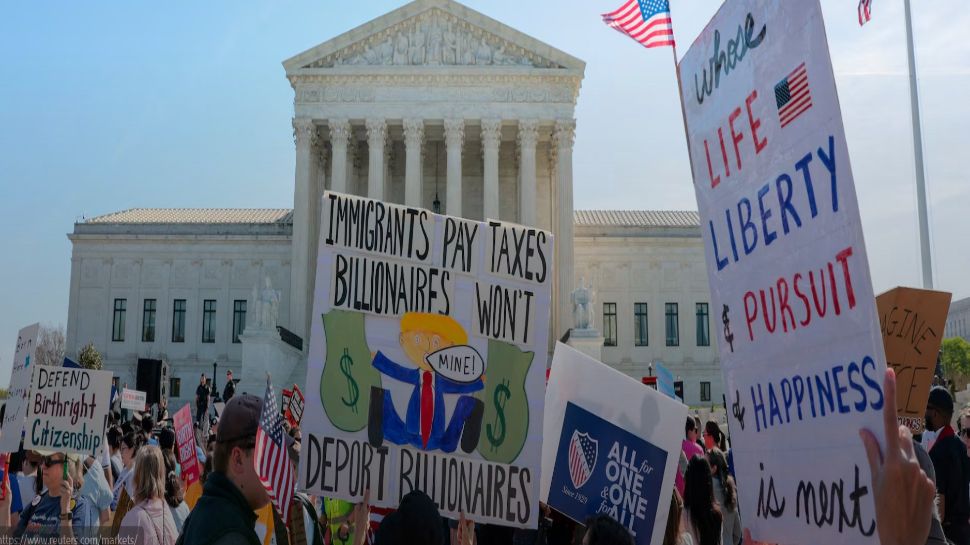)
Image: Zee News
The Trump administration's defense of limiting birthright citizenship in the US Supreme Court has raised concerns among Indian professionals, who make up a significant portion of H-1B visa holders. The proposed changes could affect citizenship for children born to temporary visa holders, challenging long-standing practices and creating uncertainty for many families.
- 01Trump administration argues that the 14th Amendment does not guarantee citizenship to children of temporary visa holders.
- 02The proposal could significantly impact Indian families, as they represent the largest group of H-1B visa holders in the US.
- 03Supreme Court judges raised practical concerns about implementing the proposed citizenship verification system.
- 04Opponents cite the 1898 Wong Kim Ark decision, which affirmed citizenship rights for those born in the US.
- 05The outcome of the Supreme Court case could reshape immigration policy and citizenship determination in the US.
Advertisement
In-Article Ad
During a Supreme Court hearing on April 2, 2026, the Trump administration defended its plan to limit birthright citizenship, arguing that children born in the United States to parents on temporary visas may not automatically receive citizenship. Solicitor General John Sauer stated that the 14th Amendment’s citizenship clause was not intended to apply universally, emphasizing that citizenship requires direct allegiance to the US rather than just being born on its soil. This interpretation poses significant implications for Indian professionals, who are the largest group of H-1B visa holders in the country. Currently, their children born in the US are granted citizenship under existing laws, but the administration's stance challenges this practice. Supreme Court judges expressed concerns about the practicalities of determining citizenship status at birth and the potential need for immigration authorities to verify parental status. Opponents of the administration's view argue that it contradicts established legal precedent, specifically the 1898 United States v. Wong Kim Ark ruling, which affirmed citizenship rights for individuals born in the US regardless of their parents' immigration status. The case has broader implications for thousands of children born in the US each year and raises constitutional questions about citizenship and the authority of executive and congressional powers.
Advertisement
In-Article Ad
The proposed changes could create uncertainty for Indian families regarding their children's citizenship status, affecting their long-term residency and opportunities in the US.
Advertisement
In-Article Ad
Reader Poll
Do you support limiting birthright citizenship for children of temporary visa holders?
Connecting to poll...
Read the original article
Visit the source for the complete story.