



Supreme Court Debates Limits of PILs in Sabarimala Case
'Difficult to declare millions of beliefs wrong': SC hears PIL limits in Sabarimala case debate
 The Economic Times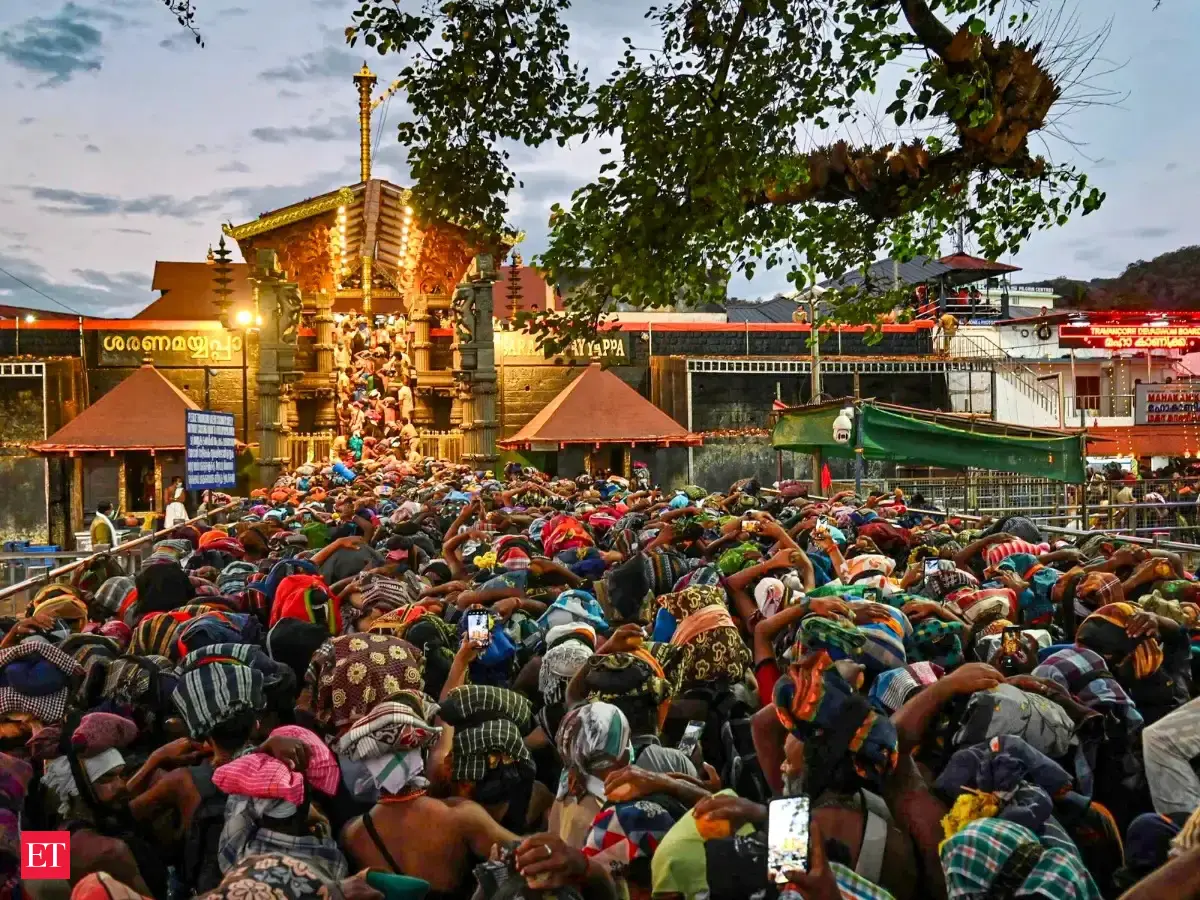
Image: The Economic Times
The Supreme Court of India is examining the validity of public interest litigations (PILs) concerning religious practices, particularly the exclusion of women from the Sabarimala temple in Kerala. The Travancore Devaswom Board argues that such PILs should not interpret religious beliefs, highlighting the complexities of declaring the beliefs of millions as erroneous.
- 01The Supreme Court is discussing the maintainability of PILs in religious matters.
- 02The Travancore Devaswom Board argues against using PILs to interpret religious practices.
- 03CJI Surya Kant noted the difficulty in declaring the beliefs of millions wrong.
- 04The court is considering whether non-believers can challenge religious practices through PILs.
- 05A previous ruling in 2018 lifted the ban on women's entry into the Sabarimala temple.
Advertisement
In-Article Ad
The Supreme Court of India is deliberating on the maintainability of public interest litigations (PILs) concerning religious practices, specifically regarding the Sabarimala temple in Kerala. During the hearing, Chief Justice of India (CJI) Surya Kant emphasized the challenge of declaring the beliefs of millions as wrong, as the Travancore Devaswom Board (TDB) argued that PILs should not serve as a means to interpret religious practices. Senior advocate Abhishek Singhvi, representing the TDB, contended that allowing such PILs would distort the constitutional framework governing religious freedoms under Articles 25 and 26 of the Constitution. He pointed out that the exclusion of women aged 10 to 50 from the temple is directly linked to the deity's identity as a lifelong celibate, or Naishtika Brahmachari. Singhvi asserted that the classification of women based on age is not a matter of gender discrimination but is rooted in religious belief. The court is also considering whether individuals not belonging to a religious group can question its practices through PILs. The hearing will continue, following a previous ruling in 2018 that lifted the ban on women entering the Sabarimala temple, which the court noted could have broader implications for Hinduism and societal unity.
Advertisement
In-Article Ad
The court's decision could significantly affect women's access to religious sites in India, shaping future policies on gender equality in religious practices.
Advertisement
In-Article Ad
Reader Poll
Should the Supreme Court allow public interest litigations to challenge religious practices?
Connecting to poll...
More about Travancore Devaswom Board
Read the original article
Visit the source for the complete story.